Pomegra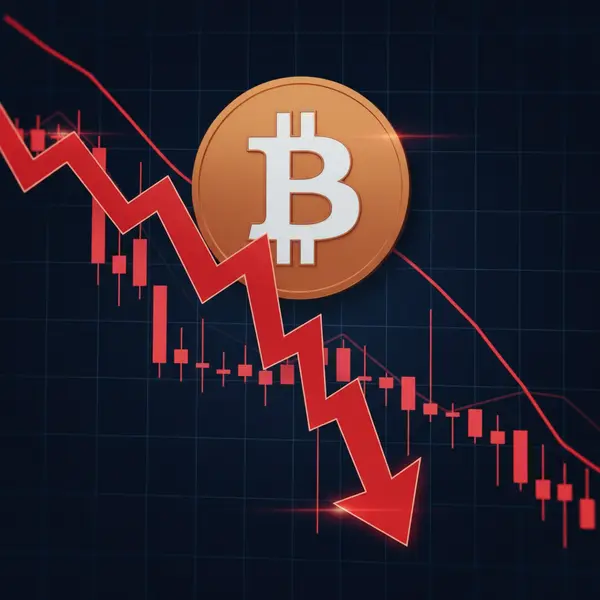
Market Volatility Strikes Digital Assets
Bitcoin experienced a dramatic 8% decline on February 6, 2026, trading at approximately $64,661 during early morning hours EST. The world's largest cryptocurrency briefly touched lows near $60,000 before recovering slightly, representing a significant retreat from its October 2025 record high above $124,000. The sharp selloff erased approximately $47 billion in market value within 24 hours.
Technology Sector Contagion Spreads to Crypto Markets
The digital asset decline coincided with broader weakness across technology stocks, as investors questioned massive artificial intelligence investments by major corporations. Amazon's announcement of a 50% increase in capital spending to $200 billion for AI infrastructure triggered an 11% after-hours decline in the e-commerce giant's shares, contributing to negative sentiment across risk assets including cryptocurrencies.
Institutional Selling Pressure Intensifies
Cryptocurrency exchanges reported elevated trading volumes as institutional investors reduced positions following the token's meteoric rise throughout 2025. Data from major trading platforms showed Bitcoin futures contracts experiencing significant selling pressure, with February 2026 contracts trading at $66,565, down from opening levels near $72,550 earlier in the week.Asian Markets Reflect Global Risk Aversion
International equity markets mirrored the cryptocurrency selloff, with Hong Kong's Hang Seng Index falling 1.4% and South Korea's Kospi declining 1.4%. Technology-focused stocks bore the brunt of selling pressure, with Samsung Electronics and SK Hynix both trading lower despite ongoing semiconductor demand. The correlation between traditional risk assets and digital currencies remained elevated during the trading session.Safe Haven Assets Gain Traction
Gold and silver prices demonstrated mixed performance as investors rotated away from speculative assets. Gold declined 0.6% to $4,858.60 per ounce after approaching $5,600 last week, while silver dropped 5.5% to $72.52 per ounce. The precious metals sector maintained elevated levels compared to historical averages, reflecting ongoing uncertainty in global financial markets.Regulatory Environment Remains Key Factor
Cryptocurrency regulation continues influencing market dynamics as governments worldwide develop frameworks for digital asset oversight. Recent surveys indicate 70% of institutional investors still view Bitcoin as undervalued despite the current correction, suggesting potential buying opportunities for long-term holders. The regulatory clarity achieved in 2025 provides a foundation for future growth, according to industry analysts.Market Outlook Maintains Long-Term Optimism
Bitcoin's technical indicators suggest the cryptocurrency remains in a volatile consolidation phase following its substantial gains throughout 2025. Trading volumes across major exchanges exceeded daily averages by 40%, indicating heightened investor interest despite negative price action. The digital asset's correlation with traditional risk assets has increased, making it susceptible to broader market sentiment shifts.The cryptocurrency's decline represents a natural correction following extraordinary gains, with market participants reassessing valuations amid changing macroeconomic conditions. Despite short-term volatility, institutional adoption continues supporting long-term demand for digital assets as portfolio diversification tools.
Mentioned tickers: BTC-USD, BTCUSD