Pomegra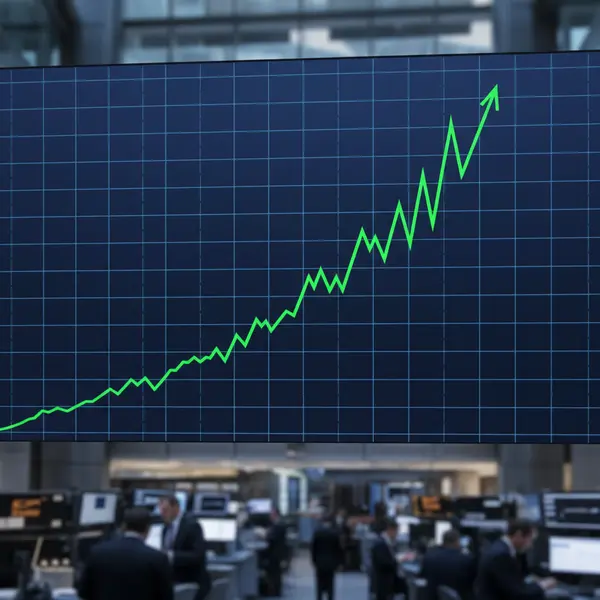
---
The Ceasefire Sparks Wall Street's Biggest Day in a Year
The Dow Jones Industrial Average closed Wednesday at 47,909.92, surging 2.85%, or 1,325 points — its strongest one-day performance since April 2025, when President Trump softened his initial tariff stance. The S&P 500 climbed 2.51% to close at 6,782.81, its sixth consecutive session of gains, while the Nasdaq Composite advanced 2.80% to close at 22,635.00.
The catalyst was Trump's post on Truth Social just 90 minutes before his stated 8 p.m. deadline for Iran to reopen the Strait of Hormuz — the critical global oil shipping passage that had been effectively closed for five weeks of hostilities. "I agree to suspend the bombing and attack of Iran for a period of two weeks," Trump wrote. "We received a 10-point proposal from Iran, and believe it is a workable basis on which to negotiate."
Iran's Foreign Minister subsequently confirmed that Tehran agreed to reopen the strait for the duration of the two-week pause, contingent on all attacks ceasing. Israel also agreed to the ceasefire terms, according to published media reports.
---
Oil Records Steepest Single-Day Drop Since 2020
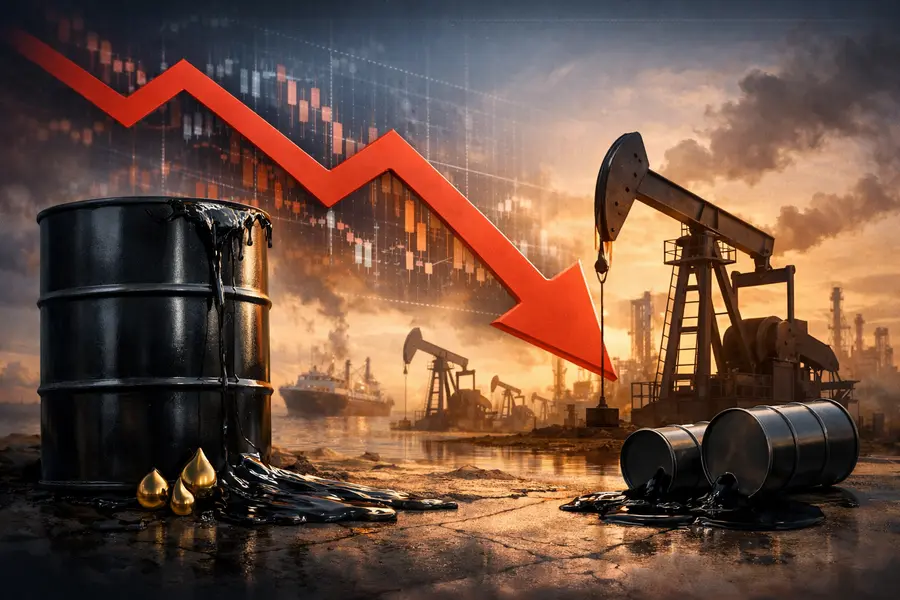
The ceasefire announcement triggered a historic collapse in crude oil prices. West Texas Intermediate (WTI) futures, the U.S. benchmark, tumbled 15% to approximately $96.25 per barrel at Wednesday's close — the largest one-day decline since 2020. Brent crude, the global benchmark, settled 13% lower at $94.75 per barrel.
The dramatic drop reflected market relief that the Strait of Hormuz — through which approximately 20% of the world's daily crude supply flows — could soon reopen for unrestricted tanker traffic. Brent crude had been trading above $130 per barrel at peak war-time levels, and entered Wednesday's session still up roughly 30% from pre-conflict levels of around $70 in late February. Analysts at Capital Economics project oil hovering near $95 per barrel through the second quarter before retreating to $80 by year-end, assuming the ceasefire holds.
Energy stocks bore the brunt of the selloff, with the S&P 500 Energy Sector the only one of eleven GICS sectors to close in the red on Wednesday, falling 3.66%. APA Corp. led S&P 500 decliners, plunging approximately 10%, while Chevron (CVX) and ExxonMobil (XOM) dropped 4.4% and 4.7%, respectively. ConocoPhillips (COP), Marathon Petroleum (MPC), and Occidental Petroleum (OXY) each fell around 6%.---
Travel, Tech, and Consumer Stocks Lead the Rally
The sectors hardest hit by war-driven fuel costs emerged as the session's biggest winners. Airlines and cruise operators surged dramatically in pre-market trading before pulling back to strong, but more modest, closing gains. United Airlines (UAL), Delta Air Lines (DAL), and American Airlines (AAL) posted pre-market gains exceeding 12% before finishing the session with solid advances. Delta's gains were bolstered by a better-than-expected first-quarter earnings report: the carrier posted adjusted EPS of $0.64 on revenue of $15.9 billion, beating analyst estimates compiled by Visible Alpha.
Carnival Corp. (CCL) soared 11%, while Norwegian Cruise Line (NCLH) and Royal Caribbean (RCL) gained approximately 9% and 8.5%, respectively. The Dow Jones Transportation Average surged 3.23% to close at a fresh all-time record high, its best daily performance since August 2025.Among the Magnificent Seven, Meta Platforms (META) led all components with a 6.5% advance. Apple (AAPL) shares recovered 1.5% after Bloomberg confirmed the company's first foldable iPhone remained on track for a September debut alongside the iPhone 18 Pro lineup, countering a Tuesday report suggesting production delays. Bitcoin rallied sharply as well, trading toward $71,100 at Wednesday's close after peaking near $72,700 in the session. Crypto-linked equities including Coinbase (COIN), Strategy (MSTR), MARA Holdings (MARA), and Robinhood (HOOD) each gained 5–8%.
Levi Strauss (LEVI) shares jumped 11% after the denim maker reported a first-quarter top and bottom-line beat with revenue of $1.74 billion and adjusted EPS of $0.42. The company also raised its full-year revenue and profit outlook. Gold futures climbed 1% to $4,730 per ounce, supported by a falling U.S. dollar, which slipped 0.7% to 99.13. 10-year Treasury yields ticked down slightly to 4.29%.In a notable tech development, Intel (INTC) confirmed it is joining Elon Musk's Terafab project, alongside SpaceX, xAI, and Tesla (TSLA), to design and fabricate chips for AI infrastructure. Intel shares had already closed 4% higher Tuesday on the news, extending a recent upward trend.
---
Ceasefire Frays Within Hours; Thursday Futures Retreat
The euphoria proved short-lived. By Wednesday evening, Iran's parliamentary speaker Mohammed Bagher Ghalibaf publicly accused the United States of violating three terms of the ceasefire agreement, citing Israel's continued strikes on Lebanon, a drone's reported entry into Iranian airspace, and the denial of Iran's right to enrich uranium. "In such a situation, a bilateral ceasefire or negotiations is unreasonable," Ghalibaf stated on social media platform X.
Tanker traffic through the Strait of Hormuz remained halted Thursday morning. Oil prices rebounded sharply, with WTI futures rising 3.19% to $97.96 per barrel and Brent June futures gaining 2.88% to $97.48 per barrel in overnight and early morning trading.
U.S. stock index futures retreated on Thursday: Dow futures fell approximately 0.35%, while S&P 500 futures and Nasdaq 100 futures each lost around 0.40%. Asian equity markets also traded lower, with South Korea's Kospi down 1.41%, Japan's Nikkei 225 falling 0.76%, and China's CSI 300 declining 0.72%.
President Trump on Wednesday reinforced the U.S. position, warning that military forces would remain deployed in and around Iran until Tehran demonstrates full compliance, adding that any breach of the deal would trigger a military response "larger than anything seen before."
---
Fed Watch: PCE Data and Rate Cut Odds in Focus
Thursday's session brings a critical macro catalyst: the March Personal Consumption Expenditures (PCE) price index, the Federal Reserve's preferred inflation gauge, due at 8:30 a.m. ET, alongside weekly jobless claims data. Forecasts compiled prior to the release pointed to a Core PCE reading of approximately 3.0% year-over-year.
Fed rate cut expectations ticked modestly higher following the ceasefire announcement. Markets were pricing in approximately a 25% probability of a rate cut by December 2026, up from 14% the prior day — still reflecting overwhelmingly tight monetary policy expectations. Federal Reserve minutes from the most recent policy meeting confirmed officials are closely monitoring Middle East developments and their pass-through to U.S. inflation before reconsidering the trajectory of interest rates.Analysts at Cantor Fitzgerald and across Wall Street broadly characterized Wednesday's move as a genuine "buying opportunity" with an important caveat: the Strait of Hormuz has not yet reopened and ceasefire compliance remains unverified. "There are still risks — you have a lot of players involved, and so far Hormuz is not open," noted Eric Johnston, Chief Equity and Macro Strategist at Cantor Fitzgerald.
---
The Road Ahead: Normalcy Remains Distant
Market strategists widely cautioned that Wednesday's relief rally should not be read as a full return to pre-war conditions. Saxo Bank head of commodity strategy Ole Hansen described the path ahead as a road "paved with multiple layers of uncertainty." Analysts at Capital Economics estimated that clearing the shipping logjam at Hormuz could take at least 10 days, while restarting shuttered oil production facilities across the Gulf could require four to six weeks.
The broader structural damage to the region's energy infrastructure carries longer-term consequences. QatarEnergy, the world's largest liquified natural gas (LNG) producer, declared force majeure last month after Iranian attacks wiped out an estimated 17% of its capacity — a disruption analysts say could persist for up to five years. European natural gas prices, measured by the TTF benchmark, fell 15% to approximately 45 EUR per MWh on Wednesday, though Capital Economics sees prices climbing again in the second half of the year as import competition intensifies.
Ebury head of market strategy Matthew Ryan summed up the prevailing view: "We suspect that market participants will not fully commit to 'risk on' trading, nor will oil futures or the dollar return to pre-war levels, until a permanent deal is struck."
---
Key Summary: The Dow's 1,325-point surge on April 8 delivered the market's best single-session performance in over a year, powered by a U.S.-Iran ceasefire that sent crude oil prices tumbling 13–15%. By April 9, the ceasefire's fragility — centered on an unresolved Strait of Hormuz reopening, fresh Iranian accusations of U.S. violations, and continued oil market volatility — put the durability of the recovery in serious question. Upcoming PCE inflation data and jobless claims on Thursday will add a further layer of complexity as traders assess the Federal Reserve's next move against a still-elevated energy price backdrop.---
Mentioned tickers: DJI, SPX, IXIC, CVX, XOM, APA, COP, MPC, OXY, DAL, UAL, AAL, CCL, NCLH, RCL, META, AAPL, COIN, MSTR, MARA, HOOD, LEVI, STZ, INTC, TSLA, NVDA, GOOGL, AMZN, QXO