Pomegra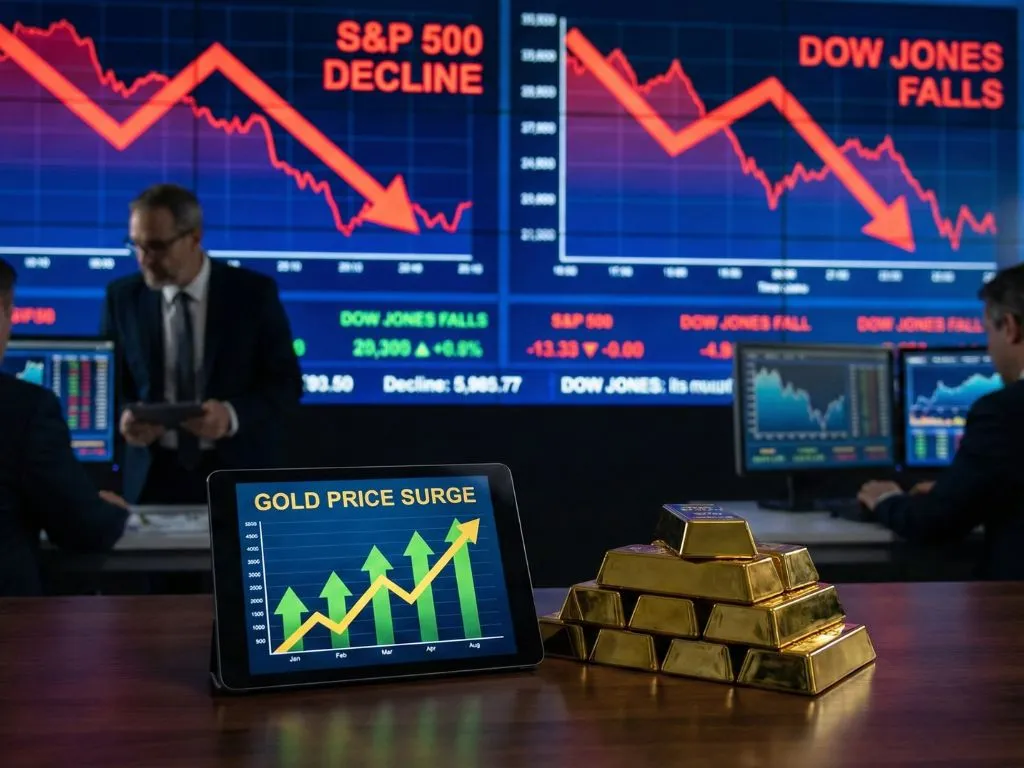
Markets experienced their most severe volatility in months after Trump threatened new tariffs on eight European nations unless they facilitate a U.S. takeover of Greenland. The Dow Jones Industrial Average plummeted 1.76%, the S&P 500 fell 2.06%, and the Nasdaq dropped 2.39%, marking the largest single-day decline since October 10, 2025.
European Markets Extend Losses Amid Escalating Tensions
European trading sessions reflected mounting concerns over trade war implications. The STOXX 600 declined 0.7% after falling 1.2% Monday, while France and Germany recorded modest declines. Britain's FTSE 100 dropped 0.67% as investors evaluated potential economic impacts from proposed U.S. measures.
Asian markets continued the selloff, with Taiwan's Taiex falling more than 1.5% and Japan's Topix dropping 1%. The MSCI Asia-Pacific index outside Japan closed 0.55% lower, extending Tuesday's global risk-off sentiment into Wednesday trading.Safe-Haven Assets Surge to Historic Levels
Gold prices shattered previous records, breaching $4,800 per ounce for the first time as investors sought traditional safe-haven assets. The precious metal gained 1.89% to $4,757.78, with spot prices reaching as high as $4,860 during overnight trading. Silver also achieved record highs, touching $95.87 before settling at $94.51.Industry analysts expect continued strength in precious metals throughout 2026. A London Bullion Market Association survey found most metals watchers anticipating gold's first breach of $5,000 per ounce this year, citing "persistent geopolitical uncertainty" as the primary driver.
Currency Markets Reflect Geopolitical Strain
The dollar weakened against major currencies as investors reassessed U.S. trade relationships. The euro gained 0.65% to $1.1721, reaching its highest level since January 2. The Japanese yen strengthened 0.07% to 158.18 per dollar, while the dollar index declined 0.52% to 98.58.
Treasury markets experienced significant volatility, with the 10-year note yield rising 6.3 basis points to 4.295%, reaching levels not seen since September. The yield curve between 2-year and 10-year Treasuries steepened by the most since October.Energy Sector Shows Resilience Despite Market Turmoil
Oil prices bucked the broader market trend, with Brent crude settling up 1.53% at $64.92 per barrel and West Texas Intermediate gaining 1.51% to $60.34. Energy markets appeared to benefit from potential supply disruption concerns amid escalating international tensions.
The VIX volatility index surged to an eight-week high of 20.99, reflecting heightened investor anxiety about near-term market prospects. Options traders positioned for continued uncertainty as European Union leaders scheduled an emergency summit for Thursday to discuss potential retaliatory measures.
Policy Responses and Market Outlook
U.S. Treasury Secretary Scott Bessent attempted to calm markets during remarks in Davos, expressing confidence that America and European countries would find solutions regarding Greenland. However, EU leadership indicated potential tariffs worth 93 billion euros on U.S. imports remain under consideration.
Trump separately threatened 200% tariffs on French wines and champagne, apparently targeting President Emmanuel Macron to join his Board of Peace initiative. These additional trade measures contributed to continued selling pressure across European consumer goods sectors.
Market strategists noted similarities to previous trade policy-driven volatility during Trump's second administration. However, the breadth and intensity of Tuesday's selloff suggests investors view current tensions as potentially more severe than earlier diplomatic disputes.
Central bank gold purchases are projected to remain strong, averaging 585 tonnes quarterly through 2026 according to J.P. Morgan Global Research. This institutional demand, combined with retail investor safe-haven buying, supports continued price appreciation for precious metals. Mentioned tickers: DJI, SPX, IXIC, VIX, STOXX, FTSE, N225, MIWD00000PUS, MIAPJ0000PUS