Pomegra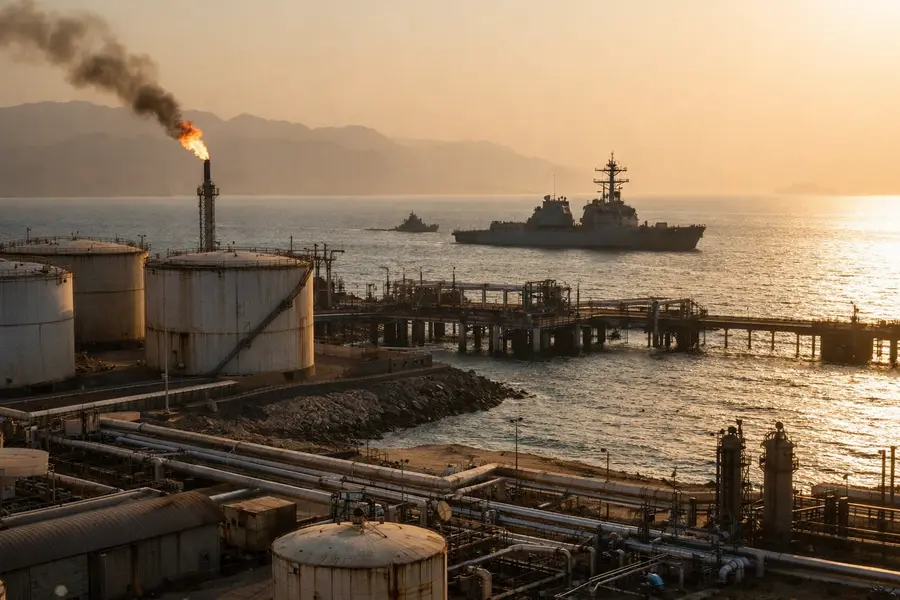
Iran's crude shipments plunged from 1.7 million to 260,000 barrels per day as Operation Economic Fury chokes Tehran's revenue; Khamenei orders a dollar exit while Treasury targets Banque Misr's UAE branch.
- Iranian oil export loadings have fallen roughly 80%, from 1.7 million b/d to just 260,000 b/d under U.S. Navy interdiction.
- Supreme Leader Ali Khamenei issued a Friday directive ordering Iran to phase the U.S. dollar out of all trade transactions.
- U.S. Treasury proposed severing Egypt's Banque Misr UAE branch from dollar correspondent banking over alleged Iran-linked transfers.
Lead
Iranian crude oil export loadings have cratered to approximately 260,000 barrels per day, an 80% collapse from the 1.7 million barrels per day recorded before the U.S. Navy launched Operation Economic Fury, the naval enforcement campaign targeting vessels carrying Iranian crude across the Persian Gulf, the Gulf of Oman, and surrounding international sea lanes. Tanker-tracking data through late August 2026 confirms the decline as the most severe disruption to Iranian oil flows since the height of the 2018-2020 maximum-pressure sanctions campaign, with consequences now rippling through global crude oil price levels and the broader architecture of dollar-denominated energy finance.What Is Operation Economic Fury?
Operation Economic Fury is the U.S. Navy's active interdiction campaign enforcing oil sanctions against Iran by intercepting and boarding tankers suspected of carrying Iranian crude under falsified documentation or third-country flag registries. The campaign covers the primary chokepoints through which Iran has historically moved its shadow-fleet shipments toward buyers in Asia, combining naval boarding operations with enhanced satellite and aerial surveillance to close the loopholes that allowed Iran to sustain near-record exports as recently as early 2025.
How Did Iranian Crude Exports Fall So Sharply?
The 80% reduction in export loadings reflects three compounding pressures acting simultaneously. Naval interdictions have directly disrupted voyage completions, while tanker operators and P&I insurers - facing secondary sanctions exposure under U.S. law - have progressively withdrawn from Iran-linked voyages, shrinking the available shadow fleet. At the same time, port-access restrictions imposed on vessels that have called at Iranian terminals have further deterred participation.
Iran had sustained elevated exports through 2024 and into 2025 by routing shipments through ship-to-ship transfers, blending operations, and falsified certificates of origin - techniques that disguised Iranian crude as Malaysian, Omani, or Iraqi barrels before delivery to Chinese and Indian refiners. Operation Economic Fury's boarding authorities and intelligence-sharing with allied maritime agencies have eroded those workarounds faster than Tehran's logistics network can adapt.
The collapse is concentrated in medium and heavy sour grades - the crude qualities Iran predominantly exports - leaving Asian refiners calibrated to process those feedstocks competing for a thinned alternative supply pool from Gulf producers.
Khamenei's Dollar Phase-Out Order
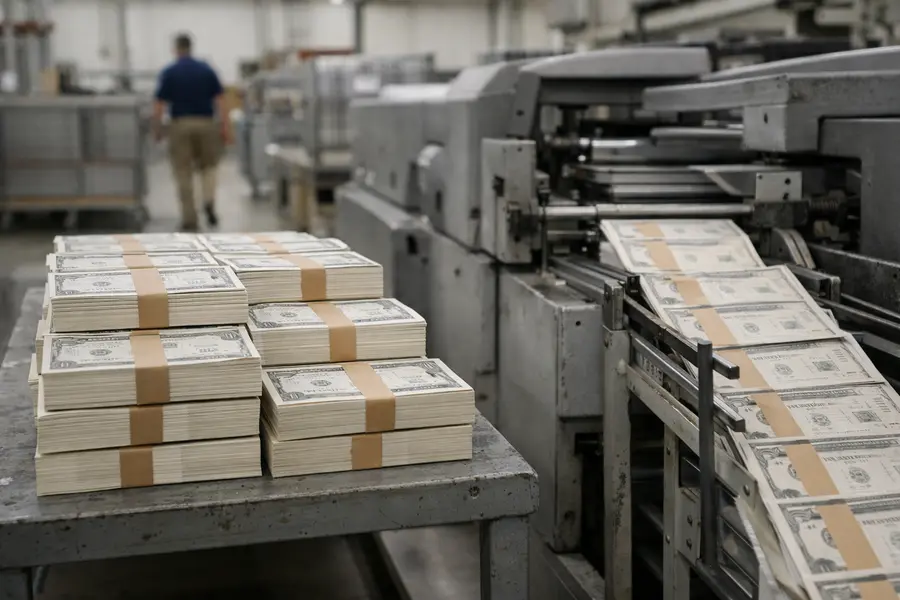
Supreme Leader Ali Khamenei responded publicly on Friday by ordering Iran to eliminate the U.S. dollar from its international trade transactions, formally institutionalizing a policy Tehran has pursued on an ad-hoc basis since the 2018 sanctions reimposition. The directive accelerates bilateral currency swap discussions with partners willing to absorb sanctions risk and provides political cover for Iranian state entities to route settlements through yuan, ruble, or other non-dollar rails.
The call mirrors de-dollarization announcements from Russia and Venezuela following their own sanctions escalations, though practical execution remains constrained. Iran's exclusion from SWIFT-connected banking infrastructure limits its ability to scale alternative settlement systems quickly, and the counterparties willing to absorb legal exposure are a shrinking subset of its former trading partners.
The directive is best understood as strategic signaling - a formal mandate to accelerate financial architecture that was already being assembled - rather than an immediate operational shift in how Iranian trade is settled. Its medium-term significance lies in deepening institutional commitments to non-dollar settlement rails that, if successfully established, could modestly erode the sanctions leverage the U.S. relies upon.
Treasury Targets Banque Misr's UAE Branch
In a parallel enforcement action, the U.S. Treasury Department proposed severing the United Arab Emirates branch of Egypt's Banque Misr from U.S. correspondent banking - the dollar-clearing relationships that allow foreign banks to process payments in U.S. currency. Treasury's action, structured under Section 311 of the USA PATRIOT Act, alleges the UAE branch facilitated financial transfers on behalf of Iran-linked entities, potentially including payments connected to sanctioned crude oil trade.
If finalized, the designation would effectively excise the branch from the global dollar payments network, a measure with material consequences for a financial institution operating in the UAE's heavily trade-dependent economy. The action reflects Treasury's escalating strategy of targeting financial intermediaries in Gulf jurisdictions that maintain Iran commercial relationships, applying pressure to correspondent banking as a complement to the naval campaign constraining physical exports.
Major global correspondent banks, including HSBC (HSBC), have faced sustained regulatory scrutiny over Iran-linked transaction processing in prior enforcement cycles, contributing to a broad tightening of compliance standards across the correspondent banking sector. The Banque Misr proposal signals that scrutiny is now extending deeper into regional institutions.
Crude Oil Market Impact
The effective removal of roughly 1.4 million barrels per day of Iranian supply from accessible markets has exerted sustained upward pressure on global crude oil price benchmarks, with the impact sharpest in the medium and heavy sour grades most directly substituted by Iranian exports. Competing exporters, particularly in the Gulf Cooperation Council, face market pressure to expand output to fill the gap, though spare capacity and OPEC+ coordination agreements constrain the speed and scale of any offset. Energy sector equities and oil-linked instruments, including the United States Oil Fund (USO) and the Energy Select Sector SPDR Fund (XLE), have reflected the supply constraint in recent sessions.
Outlook
The U.S. naval enforcement posture shows no sign of near-term relaxation, and Treasury's pipeline of financial intermediary actions targeting Iran sanctions evasion is active. Khamenei's dollar phase-out directive opens a structural question - whether Iran, Russia, and aligned states can deepen non-dollar trade settlement to a degree that meaningfully blunts sanctions leverage - but that is a years-long project, not a near-term relief valve for Tehran's collapsing oil revenues. The Banque Misr UAE designation, once finalized, will test the risk tolerance of Middle Eastern financial institutions operating in jurisdictions where Iran-linked business remains commercially tempting. For crude markets, the 80% drop in Iranian export loadings represents a durable supply constraint absent either a diplomatic breakthrough or a sustainable degradation of the naval campaign's interdiction effectiveness.