Pomegra
---
Operation Epic Fury: 50 Days of Devastation
The war — designated Operation Epic Fury by the Pentagon — began on February 28, 2026, when U.S. and Israeli forces launched nearly 900 coordinated strikes within the first 12 hours, targeting Iranian missile launchers, air defense infrastructure, military leadership, and nuclear facilities. Supreme Leader Ali Khamenei was killed in the opening salvo, along with dozens of top Iranian officials. His son Mojtaba Khamenei was subsequently appointed supreme leader, a move President Donald Trump publicly denounced as "unacceptable."
Iran's military capabilities absorbed catastrophic blows in the weeks that followed. U.S. and Israeli forces destroyed or disabled approximately 330 of Iran's 470 missile launchers, sank an estimated 90 percent of Iran's navy, and eliminated over 250 Iranian leaders — including, on March 17, Acting Leader Ali Larijani. The IRGC's Mohammad Bagher Zolghadr now leads Iran's wartime decision-making apparatus. More than 850 Tomahawk cruise missiles were expended in the campaign — the largest single deployment of the weapon in history.
---
Iran Strikes Back: The Horizontal Escalation Strategy
Rather than surrendering, Tehran executed a deliberate strategy of horizontal escalation — widening the geographic and economic dimensions of the conflict to counterbalance overwhelming U.S. and Israeli air superiority. Iranian missile and drone salvos targeted U.S. embassies and military installations across the UAE, Saudi Arabia, Qatar, Kuwait, Bahrain, Iraq, Oman, and Jordan. Dubai International Airport, one of the world's busiest hubs, sustained drone damage and temporarily halted all flights on March 1.
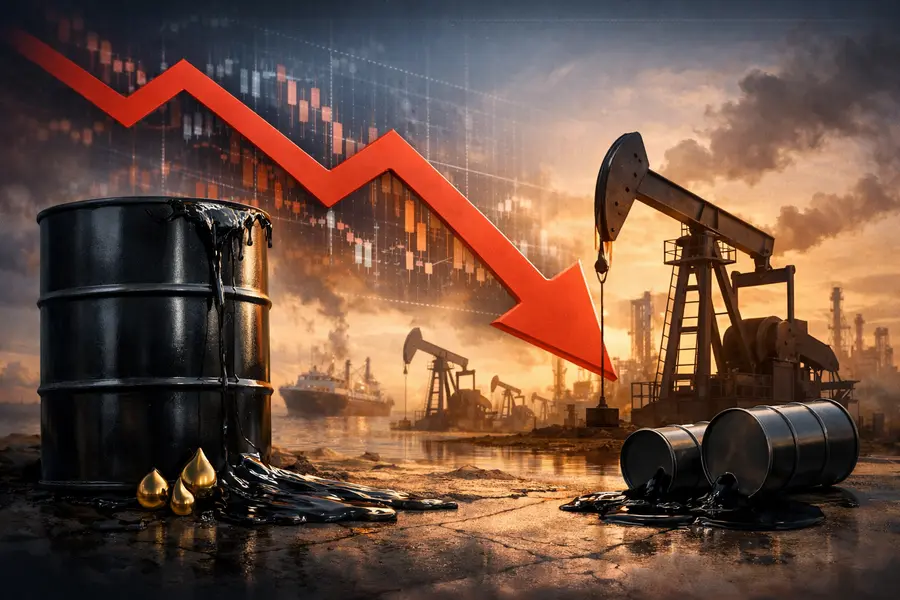
Iran's most consequential weapon proved to be the Strait of Hormuz — the maritime chokepoint through which approximately 20 percent of the world's oil supply passes daily. Commercial transit through the strait dropped more than 90 percent after the outbreak of conflict. Crude oil prices surged from roughly $70 per barrel just before the war to over $103 per barrel in March, with Brent crude briefly topping $110 a barrel — a level not seen in roughly four years. Iran collected an estimated $25 million per day in additional oil revenue during March via selective transit approvals and tolls.
---
A Fragile Ceasefire Shatters
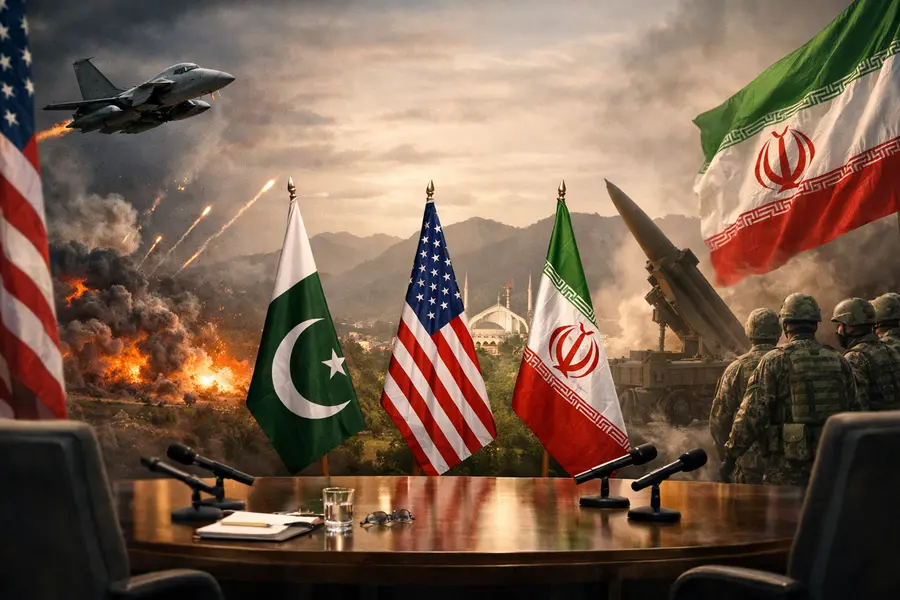
Following five weeks of intensive fighting, a two-week ceasefire brokered by Pakistan was announced on April 7–8, with China providing a last-minute diplomatic push that secured Tehran's formal approval. The truce immediately proved fragile. In the days that followed, the U.S. maintained its naval blockade of Iranian ports, while Iran continued to restrict shipping through the strait, each side accusing the other of violations.
A brief window opened on April 17, when Iran declared the Strait of Hormuz fully open to commercial traffic, sending crude prices tumbling over 10 percent in a single session. The optimism lasted barely 24 hours. Trump refused to lift the U.S. naval blockade of Iranian ports, and Tehran reimposed full closure of the chokepoint by April 18, accusing Washington of misrepresenting Iran's moves and claiming the U.S. had falsely announced Iranian capitulation on the enriched uranium question.
---
The Touska Incident: Ceasefire on the Edge
The most acute flashpoint arrived on Sunday, April 19, when the USS Spruance fired upon and disabled the Iranian-flagged cargo ship M/V Touska in the Gulf of Oman as it attempted to break the U.S. naval blockade. U.S. Marines subsequently rappelled onto the vessel and took it into custody. Trump declared the seizure a justified response to an Iranian "total violation" of the truce and renewed threats to strike "every single power plant and every single bridge" inside Iran if Tehran refused a deal.
Iran's Foreign Ministry Spokesman Esmail Baghaei denounced the seizure as "piracy," formally declared Washington in material breach of the ceasefire, and announced that Tehran had no plans to participate in the scheduled second round of Islamabad talks. President Masoud Pezeshkian struck a marginally more conciliatory tone, stating that "every rational and diplomatic path should be used to reduce tensions," while simultaneously insisting that "distrust of the enemy" remained "an undeniable necessity."
---
Energy Markets and the Global Economy Reel
As of April 20, Brent crude stood at $95.64 per barrel and West Texas Intermediate at $89 per barrel, each surging more than 5-6 percent overnight on renewed fears of a full ceasefire collapse. More than 500 million barrels of crude and condensates have been removed from global markets since the war's outbreak — representing the largest energy supply disruption in modern history, according to Kpler analytics. An estimated 13 million barrels per day of oil, condensates, and natural gas liquids remain shut in.
First-round talks in Islamabad on April 12, led by Vice President JD Vance and Iranian Foreign Minister Abbas Araghchi, failed to produce a framework agreement. Washington proposed a 20-year moratorium on Iranian uranium enrichment; Tehran countered with five years. The International Monetary Fund warned that global growth faces a measurable hit regardless of ceasefire outcome, citing persistent energy cost inflation and supply-chain uncertainty. Oxford Economics has flagged the possibility of a global recession if the strait remains effectively closed through mid-year.
---
Lebanon: A Second Front Hardens
The conflict reignited hostilities between Israel and Hezbollah in Lebanon, which had maintained a fragile ceasefire since 2024. Following the February 28 opening strikes, Israeli forces launched intensive air operations across southern Lebanon, and by mid-March initiated a limited ground invasion with objectives reaching north to the Litani River — recreating the occupation line Israel held between 1982 and 2000. A 10-day Lebanon ceasefire was announced by Trump on April 16, but the IDF continued demolishing villages inside southern Lebanon even after the truce took effect, drawing international condemnation. Over 1 million Lebanese were displaced during the conflict's peak.
---
U.S. Military Posture and Strategic Costs
The scale of the U.S. military commitment is historically unprecedented in the post-Cold War era. Three aircraft carrier strike groups — the USS Abraham Lincoln, USS Gerald R. Ford, and USS George H.W. Bush — are deployed in theater. An estimated 60 percent of the mission-capable B-1 bomber fleet is conducting strikes from RAF Fairford in the United Kingdom, while 26 percent of available B-2 stealth bombers are committed to Operation Epic Fury. Approximately 30 percent of all available Arleigh Burke-class destroyers are on station, and between 29 and 43 percent of available THAAD missile defense systems are in the Middle East. The U.S. has lost 16 MQ-9 Reaper drones, at a replacement cost of up to $904 million.
Defense analysts warn the sustained commitment is depleting difficult-to-replace munitions — including Tomahawk missiles and Patriot interceptors — with direct readiness implications for Europe and the Indo-Pacific. Gas prices inside the United States have crossed $4 per gallon for the first time since 2022, presenting a domestic political liability for the Trump administration.
---
Outlook: Resumption of Hostilities Remains the Base Case
The ceasefire expires on Tuesday, April 22, with the two parties publicly at odds and second-round talks in Islamabad in serious doubt. Diplomatic analysts at the Middle East Institute assess that the U.S. has consistently treated the negotiating table as a venue for Iranian capitulation rather than genuine bilateral compromise, a posture Tehran has found impossible to accept. Iran, for its part, retains the Strait of Hormuz as its primary strategic asymmetric lever, and shows no indication of relinquishing that leverage without concrete U.S. concessions on the blockade and uranium enrichment terms.
Markets are pricing in a high probability of renewed hostilities before the end of the week. Even under an optimistic scenario in which a new truce is agreed, energy analysts forecast it would take months to restore normal oil flow volumes through the strait, keeping Brent crude above $80 per barrel well into the second half of 2026.
---
Mentioned tickers: CL.1, LCO.1