Pomegra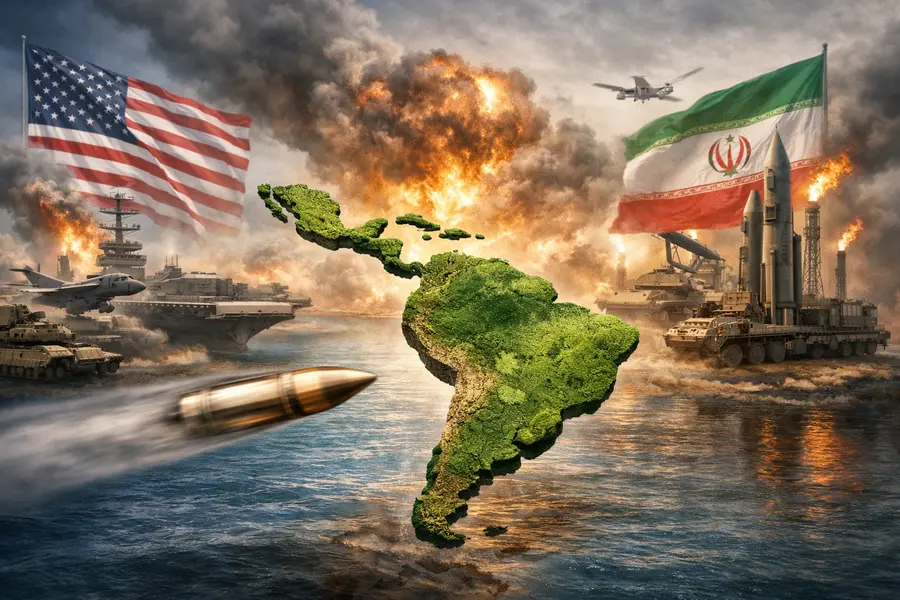
I have the data I need. Writing the article now.
- Brent crude fell from peaks above $126/barrel to below $70/barrel by July 1, the largest geopolitically-driven price swing in decades.
- Latin America economic outlook for 2026 stands at 2.2% GDP growth, down from earlier estimates, with net oil importers carrying the deepest scars.
- President Trump's July 8 declaration that the ceasefire is "over" sent Brent back to $78.02, leaving the region's economic outlook clouded again.
---
Latin American economies found brief but significant relief as Brent crude plunged below $70 per barrel following the June 17 US-Iran memorandum of understanding, easing months of oil-shock damage to the region's growth trajectory — yet the reprieve is already under threat.
Lead
For Latin American finance ministers, the June 17 memorandum of understanding between Washington and Tehran to end the 2026 Iran war and reopen the Strait of Hormuz arrived as a lifeline. The conflict had produced what the International Energy Agency called the largest oil supply disruption in the history of the global oil market, closing the strait that carries roughly one-fifth of the world's petroleum. Regional economic activity in 26 of the 33 Latin American and Caribbean nations was already decelerating. Then came the oil drop — and, within weeks, renewed uncertainty.
What Happened
The 2026 Iran war, which began in late February, triggered a rapid global oil price spiral. Brent crude surged above $126 per barrel within weeks of the Strait of Hormuz closure. For Latin America, a region where fuel costs ripple quickly into food prices and transport fares, the shock was immediate and severe. By March, fuel prices in several economies had risen 9%, domestic airfares 24%, and intercity transport fares 22%.
The June 17 MOU — an agreement calling for a formal end to hostilities within 60 days, the gradual lifting of the US naval blockade of Iranian ports, and the incremental reopening of the Strait — changed the calculus overnight. Daily Brent crude prices fell below $70 per barrel by July 1, approximately where they traded before the conflict began. The International Energy Agency revised its demand forecasts, anticipating a 1.2-million barrel-per-day drop in global oil consumption for 2026 before an expected rebound of 2.0 million b/d in 2027.
Market Reaction
Emerging markets equities touched record highs on June 19 as the deal took effect. Within Latin America, the picture was split. Colombia's peso surged 1.6% on June 16, reaching its strongest level against the dollar since December 2020, as the prospect of cheaper fuel imports dominated. The Brazilian real, however, depreciated 0.8% the same session, and Petrobras fell 5.66%, reflecting that lower oil prices erode revenue for the region's largest producer. Ecopetrol shed 5.37% and Argentina's YPF dropped 5.90% on the same day.The reversal came swiftly. After three commercial tankers were attacked near the Strait in early July, President Trump declared the ceasefire "over" on July 8 and threatened to reimpose the naval blockade. Brent settled up 5.2% at $78.02 that session; WTI advanced 4.4% to $73.52. Latin American assets slid across the board.
The Structural Divide: Exporters vs. Importers
The global conflict impact on LatAm has not been uniform. The region divides cleanly along the energy trade ledger.
Brazil, Guyana, and Argentina emerged as unexpected beneficiaries during the conflict's peak. Buyers seeking supply outside the Middle East turned to these producers; Brazil maintained output above 5 million barrels of oil equivalent per day in 2026, up nearly 16% year on year. Higher prices lifted export revenues even as domestic consumers faced pump-price pressure. Mexico, Central America, and the Caribbean faced the inverse. As net energy importers, they absorbed the full cost of the oil shock with limited ability to hedge. Inflation in the region's median economy is forecast to exceed 3% in 2026, against 2.4% in 2025. For Central American and Caribbean nations, which run thin fiscal buffers, sustained high energy costs translate directly into slower growth and tighter monetary conditions.Geopolitical Dimension
The US-Iran conflict exposed a structural vulnerability in the Latin American economic outlook: despite geographic distance from the Middle East, the region's supply chains, shipping costs, and inflation dynamics are tightly coupled to the Strait of Hormuz. Fertilizer prices — linked to natural gas, much of it transiting or priced off the Gulf — rose sharply and worsened food production costs across agricultural exporters.
The World Bank trimmed its 2026 growth forecast for Latin America and the Caribbean to 2.2%, blaming the inflationary and monetary fallout from the conflict. Brazil's forecast was cut to 1.9%; Mexico's stands at 1.6%. The IMF penciled in an $89-per-barrel oil average for the full year 2026, a figure that may yet prove conservative if hostilities resume.
The June ceasefire also revealed how quickly capital flows reprice emerging markets risk. Colombia's currency and bond markets were among the most responsive in the region, reflecting both its import dependency and its sensitivity to global risk sentiment. Peru's near-term growth outlook was revised up slightly to 2.7% on the back of improved mining and commodity conditions once oil prices eased.
What Comes Next
The 60-day window established by the June 17 MOU — set to expire by mid-August 2026 — was already straining before Trump's July 8 declaration. Swiss-hosted talks intended to formalize a permanent framework were postponed after renewed Hezbollah-Israel clashes in Lebanon. The MOU itself requires presidential signatures and verification benchmarks that have yet to be met in full.
For Latin American economies, the near-term path hinges on whether oil prices stabilize in the $70–80 range or retest triple digits. At $80, most of the region's monetary authorities can manage inflation without further rate hikes. Above $100, the calculus changes: central banks in Brazil, Mexico, and Colombia would face renewed pressure to tighten, compressing already-fragile domestic demand.
Outlook
Latin American economies sidestepped the worst of the 2026 oil shock — not through structural resilience alone, but because the US-Iran ceasefire arrived before fiscal and monetary buffers were exhausted. The World Bank and IMF still project the region to grow, if modestly, in 2026 and to outpace advanced economies. But the relief is conditional. A durable resolution to the Iran conflict that reopens the Strait of Hormuz on a permanent basis would meaningfully restore the region's growth trajectory. A return to open hostilities would not simply retrace the path — it would find Latin American economies with thinner reserves, stretched central bank credibility, and populations already sensitized to fuel and food inflation. The bullet may have been dodged once. The margin for a second miss is narrower.---
Mentioned tickers: PBR, EC, YPF