Pomegra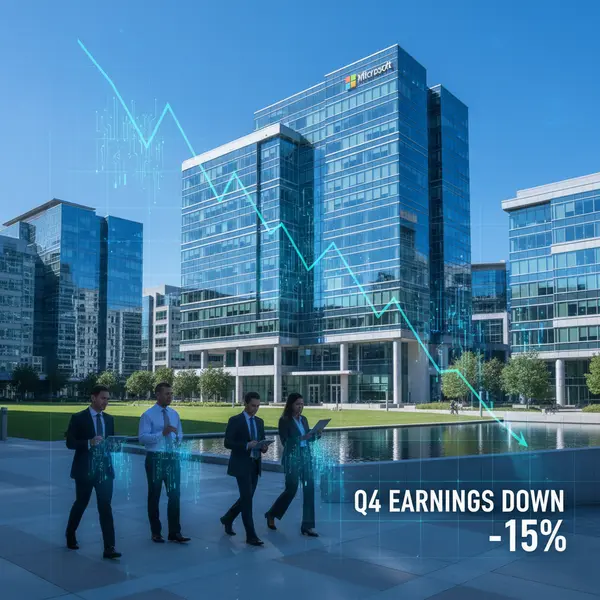
Microsoft reported fiscal second-quarter revenue of $81.3 billion, beating analyst expectations of $80.27 billion, but the positive earnings were overshadowed by soaring capital expenditures and Azure cloud growth that barely met forecasts. The company's stock dropped 6.5% in after-hours trading and continued declining 6.2% in Frankfurt markets on Thursday.
Capital Spending Reaches Historic Highs as AI Investments Surge
Microsoft's capital expenditures hit a record $37.5 billion in the October-December quarter, representing a 66% increase from the previous year and exceeding market estimates of $34.31 billion. Approximately two-thirds of this spending focused on computing chips and AI infrastructure, with Chief Financial Officer Amy Hood noting that the majority went toward short-lived assets including GPUs and CPUs.
The massive investment reflects Microsoft's aggressive push to maintain its leadership in the artificial intelligence race through its strategic partnership with OpenAI. However, the company has now spent more than $200 billion on AI technology since the start of fiscal 2024, prompting investor questions about return on investment.
Azure Growth Disappoints Despite Meeting Expectations
Microsoft's Azure cloud division reported 39% revenue growth in constant currency, just squeaking past analyst consensus estimates of 38.8%. While technically beating expectations, the growth rate represents a continued deceleration that has concerned investors about the company's ability to monetize its AI investments effectively.
The company's total cloud revenue surpassed the $50 billion milestone for the first time, but the pace of expansion has slowed amid increased competition from Google's Gemini and other AI platforms. Azure's performance remains critical to Microsoft's growth strategy as the division represents the primary vehicle for capitalizing on AI demand.
OpenAI Partnership Creates Both Opportunity and Risk
Microsoft disclosed that its cloud backlog reached $625 billion, with roughly 45% driven by OpenAI alone, highlighting the company's heavy dependence on its ChatGPT partner. The startup has committed to spending at least $281 billion with Microsoft, but recent restructuring allows OpenAI to pursue cloud deals with other providers.
CEO Satya Nadella revealed Microsoft now serves 15 million annual users for its M365 Copilot AI assistant, priced at $30 per month for business customers. This represents the first time the company has disclosed specific user metrics for its flagship AI productivity tool, signaling growing adoption despite the premium pricing.
Market Concerns Mount Over AI Investment Returns
The disappointing market reaction reflects broader investor skepticism about Big Tech's massive AI spending spree. Collectively, Microsoft, Alphabet, Meta, and Amazon are expected to spend over $500 billion on artificial intelligence infrastructure this year, with investors demanding clearer evidence of revenue generation.
Eric Clark, portfolio manager of the LOGO ETF holding Microsoft shares, expressed concern about the company's cost structure, noting that revenue increased 17% while cost of revenue rose 19%. This margin compression highlights the challenge of monetizing AI investments while maintaining profitability.
Forward Guidance Provides Mixed Signals
For the current fiscal third quarter, Microsoft forecasted Azure revenue growth of 37% to 38%, compared to analyst estimates of 36.41%. The company projected overall sales with a midpoint of $81.2 billion, matching analyst expectations of $81.19 billion.
Hood indicated that capital spending will decline slightly in the January-March quarter but warned that rising memory chip costs will pressure cloud computing margins over time. The company's guidance suggests continued heavy investment in AI infrastructure while attempting to balance growth with profitability.
The market's negative reaction demonstrates growing impatience with Microsoft's AI strategy, despite the company's early-mover advantage through OpenAI. Investors appear increasingly focused on tangible returns from the record spending rather than future growth promises, putting pressure on management to deliver clearer AI monetization results in coming quarters.
Mentioned tickers: MSFT, GOOGL, META, AMZN, ORCL