Pomegra
---
---
The Spark: U.S.-Israel Strikes Iran, Killing Supreme Leader
On February 28, 2026, the United States and Israel launched coordinated military strikes against Iran, killing Supreme Leader Ali Hosseini Khamenei. Tehran responded swiftly with missile barrages targeting multiple Gulf states, including Saudi Arabia, Qatar, Bahrain, and the UAE. The conflict has since widened to engulf Lebanon — where Israel is battling Hezbollah — while Azerbaijan reported drone incursions traced to Iranian origin. By Thursday, March 5, the war had entered its sixth consecutive day with no immediate signs of de-escalation, as President Trump declared on social media that there would be "no deal with Iran" except unconditional surrender.
---
Oil Markets in Historic Disruption
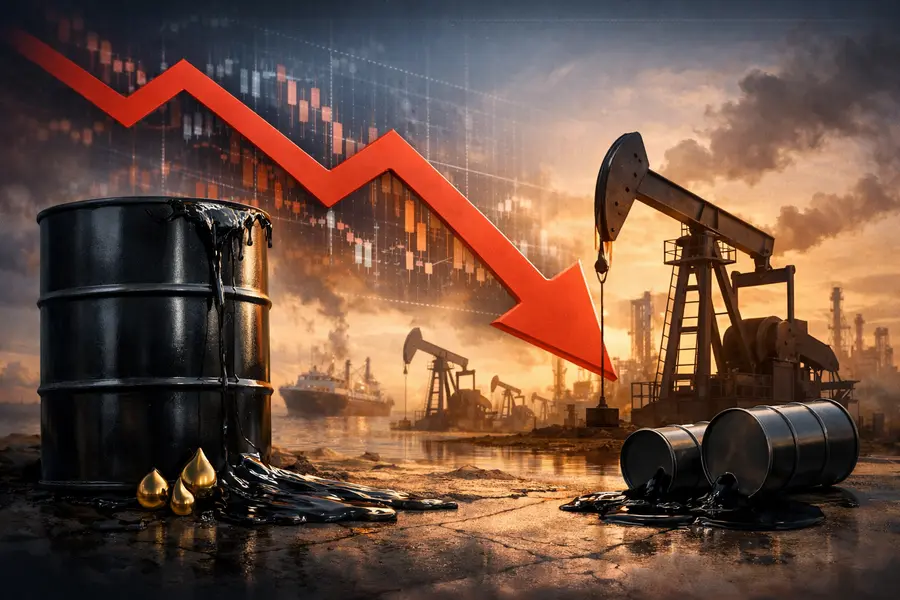
The Strait of Hormuz, the world's most critical energy chokepoint through which roughly 20 million barrels per day normally flows, has effectively stalled. Iran's Revolutionary Guard Corps continues to threaten tankers attempting to transit the waterway, and Saudi Arabia's Ras Tanura refinery — one of the largest in the world — is now offline. The Kingdom has scrambled to divert crude flows through its East-West Pipeline, which can handle only 5 to 7 million barrels per day.
The price consequences have been historic. Brent crude surged to $91.16 per barrel on Friday, a gain of 6.7% in a single session and up 25% for the week — its biggest weekly advance in futures trading history. WTI crude rocketed to $88.47 per barrel, a 9.2% daily jump and 32% weekly surge. Brent has now risen 36% year-to-date, threatening to breach the $100-per-barrel threshold if the Strait remains blocked for an extended period, according to Bank of America. At the pump, the national average for gasoline climbed to $3.25 per gallon — its highest level of 2026 — while diesel jumped to $4.16 per gallon, its steepest price since 2023.
---
Equity Markets Post Worst Week Since April
Wall Street bore the full weight of the geopolitical shock and energy inflation fear combination. The Dow Jones Industrial Average closed Friday down 676 points, or 1.41%, capping a week in which it lost more than 900 points on Thursday alone and fully erased all of its 2026 gains — a stunning reversal less than a month after it crossed the 50,000 milestone for the first time. The S&P 500 fell 1.26% Friday, closing at 6,740, with a cumulative weekly decline making it the index's worst performance since April 2025. The Nasdaq Composite dropped 1% on Friday.
International markets fared considerably worse. Japanese equities fell more than 17% from their pre-conflict peak in U.S. dollar terms, European markets dropped 5% to 7%, and emerging market indices declined by a similar magnitude. The CBOE Volatility Index, Wall Street's fear gauge, jumped 12% on Friday alone.
Among sectors, Energy was the lone outperformer — with Chevron ($CVX), EQT ($EQT), and Valero ($VLO) each hitting all-time closing highs. Every other S&P 500 sector declined, with Materials posting the steepest losses. Nvidia ($NVDA) fell an additional 3% after the Financial Times reported the company halted production of its H200 chip intended for the Chinese market, compounding pressure on the tech sector.
---
Bond Yields Surge, Dollar Strengthens as Stagflation Risk Mounts
The bond market signaled a deeper anxiety than a simple inflationary impulse. The U.S. 10-year Treasury yield climbed to 4.17% by Friday, up from 3.96% on Monday — its biggest weekly jump since May 2025. Critically, the move was driven predominantly by rising real yields (up ~12 basis points), not just inflation breakevens (up ~5 basis points), indicating that investors are demanding additional term premium to hold long-dated government debt and dialing back expectations for Federal Reserve rate cuts.
The U.S. dollar index gained 1.7% for the week, set for its best performance since late 2024, as global capital fled to safe-haven assets. The greenback's strength weighed on gold, which fell more than 1% Thursday despite the risk-off environment, as the rising dollar made the precious metal more expensive for foreign buyers.
---
Federal Reserve Caught Between Inflation and Weak Growth
A deeply disappointing February jobs report compounded the market's difficulty. The U.S. economy lost 92,000 jobs in February — a dramatic reversal from January's blowout 130,000 — and the unemployment rate rose to 4.4%. The combined shock of surging energy costs and a weakening labor market has placed the Fed in what JP Morgan Wealth Management called "a tricky, stagflationary mix of risks."
U.S. inflation already stood at 2.4% in January, above the Fed's 2.0% target. With the energy price surge now poised to filter into consumer prices, markets are pricing a 97.3% probability that the Fed holds rates unchanged at its upcoming March meeting, at a target range of 3.50%–3.75%. Futures markets continue to price approximately 50 basis points of cuts by year-end, though that conviction is eroding. Newly appointed Fed Chair Kevin Warsh faces the prospect that any rate reduction risks entrenching an inflation overshoot, while holding too long risks deepening the economic slowdown.
"The recent Iran situation puts the Fed even more on hold, more reluctant to cut rates than they were before this happened," former Treasury Secretary Janet Yellen stated. Morgan Stanley's chief economic strategist Ellen Zentner echoed the sentiment, noting that "significant weakening in the labor market would support a rate cut, but given the risk that higher-for-longer oil prices could trigger another inflation surge, the Fed may feel compelled to remain on the sidelines."
---
Global Central Banks Reassess Rate Paths
The inflationary spillover is recalibrating monetary policy worldwide. The European Central Bank faces what ING economists called a "genuine dilemma" — an oil shock threatens to push already-sticky eurozone inflation higher, while the bloc's growth outlook is already weakening under the strain of U.S. tariffs. Europe imports nearly all of its oil and a significant share of its LNG, raising the risk of a dual energy and trade shock.
Asian economies face the most acute exposure. The bulk of oil transiting the Strait of Hormuz flows to China, India, Japan, and South Korea. Goldman Sachs estimates that a six-week Strait closure pushing oil from $70 to $85 per barrel would add approximately 0.7 percentage points to regional Asian inflation, with the Philippines and Thailand most vulnerable. Nomura expects Malaysia, Australia, and Singapore to tighten interest rates in response, while Indonesia and Singapore have already stated they are closely monitoring markets.
---
Market Outlook: Volatility to Persist, Resolution Key
Prior to the conflict's eruption, global financial conditions were broadly healthy. The MSCI World Index had risen 2.9% year-to-date through February 27, Japanese equities had surged 17.1%, and S&P 500 consensus earnings estimates called for 15% profit growth in 2026. The RBC Global Asset Management Investment Strategy Committee notes that barring a meaningful escalation, the global economic expansion retains room to run, with fiscal stimulus, declining rates over the prior year, and AI-driven capital expenditure all underpinning momentum.
The base case across major asset managers — including RBC GAM, Partners Group, and BlackRock — remains one of contained disruption, not structural shift. Historically, military conflicts rarely inflict lasting economic damage beyond a few months. However, the range of outcomes has materially widened: a prolonged Strait of Hormuz closure, Brent crude above $100, and a sustained oil shock into the second half of 2026 represent tail risks that could force a more decisive Fed response and a sharper earnings downgrade cycle.
"The stock market is becoming increasingly vulnerable to turmoil in the Middle East, making the path of least resistance lower," Craig Johnson, chief market technician at Piper Sandler, said in a note to clients.
---
Mentioned tickers: $SPY, $DJI, $IXIC, $CL=F, $BZ=F, $XLE, $CVX, $EQT, $VLO, $NVDA, $TSM, $WFC, $BRK-B, $RTX, $LMT, $COST, $MRVL, $CRM, $INTU, $ADBE, $CRWD, $BKNG, $IGV, $USO, $GC=F