Pomegra
---
Markets Post Broad Gains Amid Geopolitical Optimism
The S&P 500 advanced approximately 1.0%, closing around 6,954, while the Nasdaq Composite surged 1.6%, building on nine straight winning sessions and approaching breakeven for 2026. The Dow Jones Industrial Average added roughly 275 points (+0.57%), with the Russell 2000 gaining 1.4% — a sign of broad participation beyond large-cap tech. The Cboe Volatility Index (VIX) fell sharply to 18.23, shedding nearly 4.7% and retreating firmly below the 20 threshold that typically marks elevated market anxiety. The VIX's journey from above 30 during the early days of the U.S.-Iran conflict to an 18-handle took just eight trading sessions — one of the fastest such reversals in recent market history.
---
Iran Ceasefire Talks Fuel Risk-On Sentiment
The dominant market catalyst Tuesday was a renewed wave of optimism surrounding U.S.-Iran diplomacy. President Donald Trump signaled openness to further negotiations, saying the "right people" in Iran want to reach a deal. Iran's Foreign Minister Abbas Araghchi separately informed his French counterpart that progress had been made on several key issues. Pakistan is also reportedly facilitating a second round of direct U.S.-Iran talks, which could occur as early as this week — ahead of the April 7 ceasefire agreement's expiration.
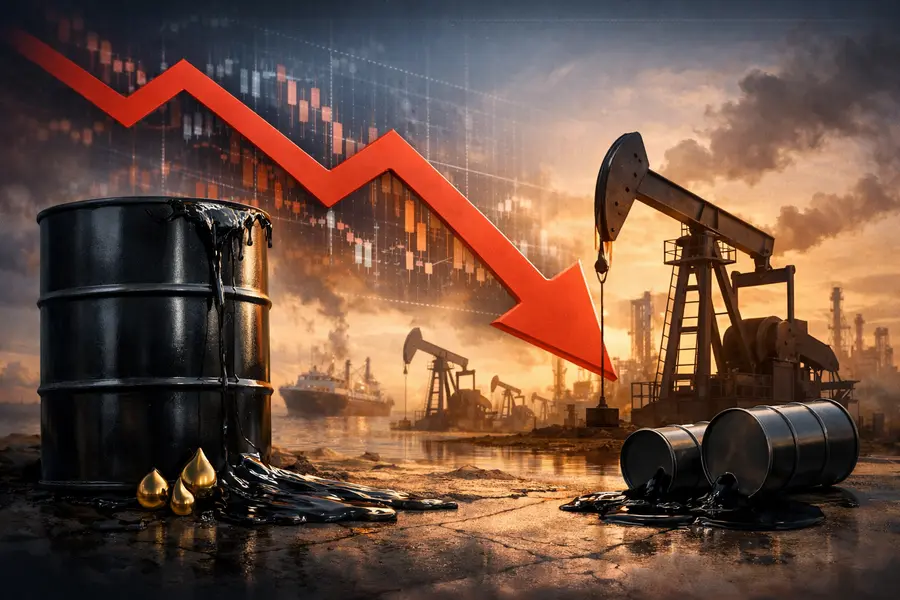
The geopolitical de-escalation pushed oil prices sharply lower. West Texas Intermediate (WTI) crude dropped as much as 6.7%, retreating below $96 per barrel, while Brent crude fell approximately 2% to around $97. The International Energy Agency added further downward pressure on oil prices, warning in its monthly report that "demand destruction will spread as scarcity and higher prices persist."
---
Cooler PPI Delivers Inflation Relief
Reinforcing the bullish tone, the Bureau of Labor Statistics reported that U.S. producer prices rose just 0.5% in March month-over-month — well below the 1.1% increase economists had forecast. Core PPI, excluding food and energy, rose only 0.1%, compared to expectations of 0.4%. On a year-over-year basis, headline PPI came in at 4.0%, below the 4.6% estimate, though above February's 3.4% reading. Nearly half of the March goods price increase was driven by a 15.7% monthly spike in gasoline prices — a direct consequence of the Middle East conflict — while underlying price pressures remained contained. The 10-year Treasury yield declined to 4.275%, easing from the prior session's close above 4.29%, and the U.S. Dollar Index slipped 0.2% to 98.19, both reflecting reduced safe-haven demand.
---
Big Bank Earnings: Trading Wins, Lending Under Pressure
Tuesday marked the heart of major bank earnings season, delivering a split verdict across Wall Street's largest institutions. JPMorgan Chase (JPM) reported a 13% rise in first-quarter profits, though CEO Jamie Dimon cautioned that the U.S. economy faces "an increasingly complex set of risks," citing geopolitical tensions, energy price volatility, trade uncertainty, and elevated asset prices. JPM shares edged lower as investors focused on net interest income pressure rather than the headline beat.
Citigroup (C) emerged as the standout winner, posting strong beats across bond trading, equities, and overall revenue, with shares trading meaningfully higher. Wells Fargo (WFC) bore the brunt of selling pressure, declining over 5% after missing on net interest income and reporting a narrower margin. BlackRock (BLK) also posted a positive earnings beat. Bank of America (BAC) and Morgan Stanley (MS) are scheduled to report later in the week.The Financial Select Sector SPDR Fund (XLF) remained up nearly 7% from the March 30 low, reflecting solid sector-level recovery despite individual stock divergence.
---
Tech Surge: Magnificent Seven Reclaims Market Leadership
Big Tech reasserted dominance on Tuesday, with the Roundhill Magnificent Seven ETF (MAGS) gaining nearly 2%, outpacing the broader Nasdaq. All three Magnificent Seven-adjacent sectors — Technology (XLK), Consumer Discretionary (XLY), and Communication Services — led large-cap sector performance. Energy (XLE) and Consumer Staples (XLP) lagged, with XLE down nearly 10% over the past 10 sessions from the March 30 low as oil retreated from war-driven highs. Oracle (ORCL) was among the session's biggest standouts, surging roughly 8% after announcing an expanded partnership with Bloom Energy (BE) to purchase up to 2.8 gigawatts of fuel cell power for its AI data center infrastructure. Bloom Energy shares soared over 23%. NVIDIA (NVDA) gained 2.8%, while Amazon (AMZN) rose amid reports it is nearing a deal to acquire satellite provider Globalstar (GSAT) — a move that would position Amazon directly against Elon Musk's Starlink. GSAT shares jumped over 11%. Novo Nordisk (NVO) rose 2.6% after announcing an AI partnership with OpenAI to accelerate drug discovery and manufacturing.---
Goldman Sachs: Inflation Shock Still Overshadowing Growth Risk
Goldman Sachs economists noted Tuesday that financial markets continue to price the Iran war primarily as an inflation shock rather than a growth drag. Since the conflict began, yields have risen across all G10 economies, with six central banks now expected to raise rates in 2026 — up from three before hostilities began. The U.S. Federal Reserve remains the only major central bank expected to cut rates this year, though the timeline for easing has been pushed further out. Goldman economists wrote that "unless the market sees forward growth prospects deteriorate sharply, this repricing is likely to remain somewhat sticky."
BofA's April global fund manager survey echoed a cautiously optimistic tone: while the survey registered its most bearish reading since June 2025 — reflecting concerns over slowing growth and higher inflation — 70% of respondents said a global recession is unlikely, with 52% calling for a soft landing and 32% for no landing at all.---
Market Outlook: S&P 500 Within 0.5% of Record Close
Tuesday's session underscored a market that has demonstrated remarkable resilience in the face of a live geopolitical conflict. The S&P 500 has now effectively erased all war-driven losses accumulated since late March, sitting within 0.5% of its all-time closing high — a recovery accomplished in just 53 trading sessions from the March 30 low. By comparison, the post-Liberation Day selloff of 2025 required 88 sessions to reach a new record.
The dual tailwinds of diplomacy progress and cooling inflation have restored broad risk appetite. Markets will continue to watch closely for any definitive U.S.-Iran ceasefire extension, the trajectory of oil prices through the Strait of Hormuz, and the remainder of Q1 earnings season — particularly Bank of America and Morgan Stanley — as key signposts for whether the current rally has durable legs.
---
Mentioned tickers: ^GSPC, ^DJI, ^IXIC, ^RUT, ^VIX, JPM, WFC, C, BLK, BAC, MS, GS, XLF, ORCL, BE, NVDA, AMZN, GSAT, NVO, MAGS, XLK, XLY, XLE, XLP, CL=F, BZ=F, IONQ, KMX, AAL