Pomegra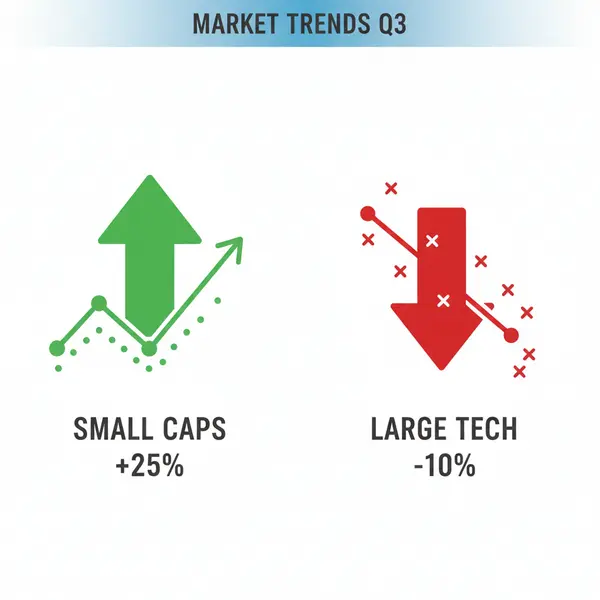
The investment landscape has experienced a dramatic shift in the first month of 2026, with small-cap stocks posting extraordinary gains while the technology giants that dominated 2025 have stumbled. The Russell 2000 index of small-cap companies has surged approximately 8-10% year-to-date through January 25, demolishing the S&P 500's modest 1.4% gain and leaving the Magnificent Seven stocks in negative territory.
Historic Performance Gap Emerges
The Russell 2000 has outperformed the S&P 500 for eleven consecutive trading sessions, marking its longest streak of outperformance since the index's inception. This represents a complete reversal from 2025, when large-cap companies posted gains of 19.78%, significantly ahead of their smaller counterparts.
The Magnificent Seven - consisting of Apple, Microsoft, Amazon, Alphabet, Meta Platforms, Tesla, and Nvidia - have collectively declined in 2026, with only two members, Alphabet and Amazon, managing positive returns. This marks a stark contrast to their collective market capitalization gains that drove much of 2025's bull market performance.
Earnings Growth Fuels Small-Cap Rally
The rotation has been driven primarily by expanding earnings expectations for small-cap companies, which are benefiting from lower interest rates and favorable fiscal policies. Small-cap earnings growth is projected to accelerate as the gap between technology earnings and the broader market narrows significantly.
Value-oriented small-caps have particularly excelled, posting gains of 5.94% compared to large-cap value returns of just 2.80%. On the growth side, small-cap companies lead with 6.02% gains versus large-cap growth's minimal 0.13% increase.Sector Leadership Shifts Dramatically
The technology sector, which finished as the second-best performing sector in 2025, has become the worst performer in 2026 with a decline of 0.40%. Meanwhile, basic materials leads all sectors with gains of 9.05%, followed by industrials and energy as real assets attract increased investment flows.
Financial services has emerged as the second-worst performing sector, falling 0.33% amid concerns over proposed credit card interest rate caps. However, strong earnings reports from major Wall Street banks suggest potential for sector recovery.
Economic Catalysts Support Rotation
The rotation has been amplified by several economic factors, including sustained fiscal stimulus measures and the Federal Reserve's expected policy stance. The One Big Beautiful Bill Act has provided additional support for smaller companies, while lower borrowing costs have improved their competitive positioning against larger rivals.
Geopolitical developments have also contributed to the rotation, as investors seek diversification beyond concentrated technology positions. Recent policy changes and international trade dynamics have boosted demand for domestic-focused small-cap companies and real asset investments.Market Breadth Expansion Signals Healthy Rally
The broadening of market leadership beyond the Magnificent Seven represents a healthy diversification of investment returns. Market strategists view this development as sustainable, particularly given the improving earnings outlook for non-technology sectors and continued economic expansion.
Small-cap companies are positioned to benefit from multiple expansion as valuations remain attractive relative to their large-cap counterparts. The current rotation reflects fundamental improvements in small-cap business conditions rather than temporary market dynamics.
Outlook for Continued Outperformance
Analysts expect the small-cap rally to continue through 2026, supported by favorable macroeconomic conditions and policy tailwinds. The combination of steady economic growth, accommodative monetary policy, and fiscal stimulus creates an environment conducive to sustained small-cap outperformance.
The market rotation demonstrates the cyclical nature of investment performance and the importance of portfolio diversification beyond concentrated large-cap positions. As earnings growth broadens across market capitalizations, the investment landscape appears poised for continued evolution throughout 2026.
Mentioned tickers: RUT, SPY, QQQ, IWM, AAPL, MSFT, AMZN, GOOGL, META, TSLA, NVDA