Pomegra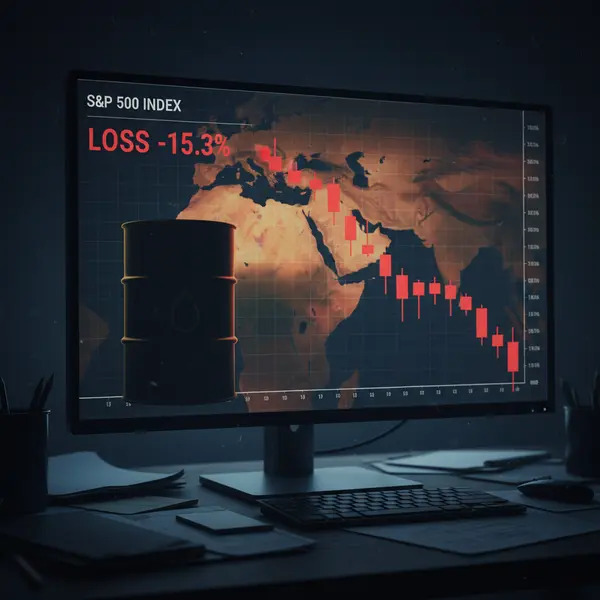
Wall Street Futures Slip as Weekend Military Incident Reverses Record Gains
U.S. equity markets opened lower on Monday, April 20, 2026, as fresh geopolitical shock from the Middle East wiped out the euphoria that had sent the S&P 500 to all-time highs just 36 hours earlier. S&P 500 futures slid 0.64% to 7,115, Nasdaq 100 futures dropped 0.67% to 26,646, and Dow futures retreated 0.72% to 49,282 — reversing a week in which the S&P 500 had gained 4.9% and the Nasdaq surged 6.8%, with the tech-heavy index notching its 13th consecutive winning session, a streak not seen since 1992.
The catalyst: on Sunday, April 19, a U.S. Navy guided-missile destroyer, USS Spruance, intercepted and seized Iranian-flagged cargo vessel TOUSKA in the Gulf of Oman following a six-hour standoff. U.S. Marines from helicopter carrier USS Tripoli rappelled aboard and took custody of the ship. President Trump announced the seizure on Truth Social, stating the U.S. had stopped the vessel by "blowing a hole in the engine room." Iran's military command responded by immediately closing the Strait of Hormuz — through which approximately 20% of the world's oil and gas supply transits — reversing Friday's declaration that the waterway was "completely open."
---
Oil Surges, Gold Drops in Risk-Off Rotation
WTI crude oil surged 6.9% to $89.90 per barrel in early Monday trading, recovering almost all of Friday's dramatic 10.81% plunge that had been triggered by optimism over the Strait's brief reopening. Brent crude climbed 5.7% to $95.50, while European natural gas futures spiked 11% as energy-importing nations repriced supply-shock risk they had spent the prior week discounting.In a counterintuitive move, gold fell 1.4% to $4,775 per ounce despite the geopolitical escalation. The paradox was explained by a 0.55% surge in the U.S. Dollar Index (DXY) to 98.62 — snapping a three-week losing streak — which mechanically pressured the dollar-denominated metal. The 10-year U.S. Treasury yield climbed 8 basis points to approximately 4.30%, retesting a prior breakdown level, as oil-driven inflation fears raised concerns that the Federal Reserve would remain hawkish and defer rate cuts. Fed rate cut probability for 2026 stood near 30%, with analysts warning that sustained oil at $90+ could push that figure to 20%.
---
Ceasefire Binary Looms Over Every Asset Class
The fragile U.S.–Iran ceasefire, struck on April 7, is set to expire Wednesday, April 23 — creating what market strategists described as a genuine binary risk event. Vice President JD Vance, who led 21 hours of failed negotiations in Islamabad on April 11–12, departed Monday for Pakistan with envoys Steve Witkoff and Jared Kushner for a second round of talks. Iran's foreign minister Abbas Araghchi described Washington's approach as "proof of America's lack of seriousness in diplomacy," and Tehran formally rejected participation in a second round, citing what it called excessive U.S. demands and the continuing naval blockade.Markets were pricing approximately 55% probability of a ceasefire extension and 45% probability of breakdown, representing the highest binary risk week of 2026. Scenario analysis from trading desks outlined sharp divergent outcomes: a deal reached would send WTI down $10–$15 toward $80, push equity indices to new all-time highs above S&P 500 7,200, and drive the 10-year yield back below 4.25%; a ceasefire collapse would surge WTI toward $100–$110, trigger a 3–5% selloff in the S&P 500, and spike yields above 4.40%.
Trump simultaneously threatened to "knock out every power plant and bridge in Iran" if a deal failed to materialize, adding further volatility to diplomatic expectations.---
Analyst Warning: "Complacent" Investors Misreading the Conflict
Senior strategists urged caution on Monday, drawing explicit parallels to a historical precedent. Matt Gertken, chief geopolitical strategist at BCA Research, told CNBC's Squawk Box Europe that investors were treating the Iran situation like Trump's "Liberation Day" tariff playbook — assuming the president could raise and lower the temperature at will — but cautioned that "Iran has been attacked, and they have a higher pain threshold."
Deutsche Bank's head of macro research, Jim Reid, cited an "uncomfortable" historical comparison: the S&P 500 rallied more than 10% in the early weeks of the Ukraine war in 2022 on hopes of a quick negotiated settlement, only for those hopes to be dashed. The index subsequently fell approximately 25% from its January 2022 peak to its October trough. "That episode is a clear warning sign," Reid wrote in a Monday note. Patrick O'Donnell, chief investment strategist at Orbis, told CNBC that equity markets were viewing the situation with a "glass half full" view, and stressed that whether the Strait of Hormuz actually reopened in a sustained manner remained the critical condition for any durable stock market recovery.---
Sector Rotation: Energy Stocks Gap Higher, Tech and Europe Lag
The geopolitical re-escalation created a clear sector rotation. Energy majors ExxonMobil (XOM), Chevron (CVX), Shell (SHEL), and BP were all expected to gap 4–6% higher at the U.S. open in direct response to WTI's 7% move — but each gain carried the same ceasefire trip-wire.
Technology stocks led the decline, with Nasdaq futures underperforming as higher oil prices threatened to reignite inflation and constrain Federal Reserve flexibility. NVIDIA (NVDA), which had rallied on TSMC's blowout Q1 EPS beat of 58.3%, was expected to dip toward its cup-and-handle handle base near $189–$192.
European markets bore the brunt of the selloff: the DAX 40 futures fell 1.2%, significantly steeper than U.S. declines, reflecting the eurozone's structurally deeper exposure to Hormuz disruptions through energy imports. European natural gas prices +11% represented a direct hit to eurozone input costs, adding headwinds for the euro, which fell 0.35% to 1.1791 against the dollar.---
High-Stakes Week: Tesla, IBM Earnings Collide With Ceasefire Expiry Wednesday
Wednesday, April 23, presented a three-way collision of major catalysts. Tesla (TSLA) was scheduled to report Q1 results after the close, with consensus EPS estimated at $0.36 — well below the same quarter a year prior — with key watch items including the rollout status of FSD version 14.3 and the Austin Robotaxi fleet of 135 vehicles. IBM was also due after the close, with EPS estimated at $1.81, where AI consulting revenue from its watsonx platform and hybrid cloud growth were the primary focus. Simultaneously, the ceasefire expired the same evening.
Earlier in the week, Intel (INTC) was expected to report near-breakeven Q1 earnings Thursday, with a near-zero EPS estimate reflecting ongoing market share losses, though a heavily shorted position created short-squeeze risk on any positive commentary around 18A node production ramps.
U.S. Retail Sales for March were due Tuesday, with consensus expecting a modest +0.1% gain following February's +0.2% reading. Flash PMI Manufacturing and Services data was scheduled Thursday at 13:45 GMT, alongside weekly jobless claims expected around 210,000.---
Bitcoin Shows Diminishing Sensitivity to Iran Shocks
Bitcoin (BTC/USD) fell just 1.6% to $74,335 — a notably muted reaction relative to the 7% surge in oil and 0.7% drop in equity futures. Strategists highlighted a pattern of diminishing shock sensitivity across four successive Iran escalation events: Shock 1 had triggered a -10% BTC decline, Shock 2 -5%, Shock 3 -3%, and Monday's Shock 4 only -1.6%. Bitcoin ETFs recorded net inflows of $786 million in the prior week, reflecting sustained institutional accumulation that had absorbed successive geopolitical shocks without breaking the technical structure.The $75,000 breakout level, cleared on April 17 with conviction, was being retested as textbook post-breakout support, with the 200-day moving average at $83,000 cited as the next structural target.
---
Prior Week's Record Highs Now Under Scrutiny
The prior week had been defined by one of the sharpest equity rallies in years, built almost entirely on the assumption of ceasefire progress. The S&P 500 closed Friday at 7,126.06, up 84.78 points or 1.2% on the day. The Dow Jones Industrial Average surged 868.71 points or 1.8% to 49,447.43. Those gains — fueled by the Strait of Hormuz's brief declaration as "completely open," strong Q1 earnings from Bank of America, Morgan Stanley, and TSMC, and Trump's comments at a Las Vegas event that the war "should be ending pretty soon" — now faced the risk of being unwound.
The prior all-time high level of 7,022 on the S&P 500, established on April 15, was identified by strategists as the critical support zone. A daily close below that level risked confirming a "bull trap" pattern, with downside targets at 6,960 and 6,880. The weekly Morning Star reversal pattern established the week of April 6–10 — when the index briefly tested 6,780 at a weekly RSI of 38 — remained the medium-term structural floor for bulls.
---
Equity markets enter the week at a crossroads defined by a single geopolitical binary. The record highs of last week reflected a peace premium; whether that premium is earned or reversed depends on the outcome of diplomacy in Islamabad — and the fate of a ceasefire that expires in 72 hours.---
Mentioned tickers: SPY, QQQ, XOM, CVX, SHEL, BP, TSLA, NVDA, IBM, INTC, NFLX, TLT, GLD, USO, XLE