Pomegra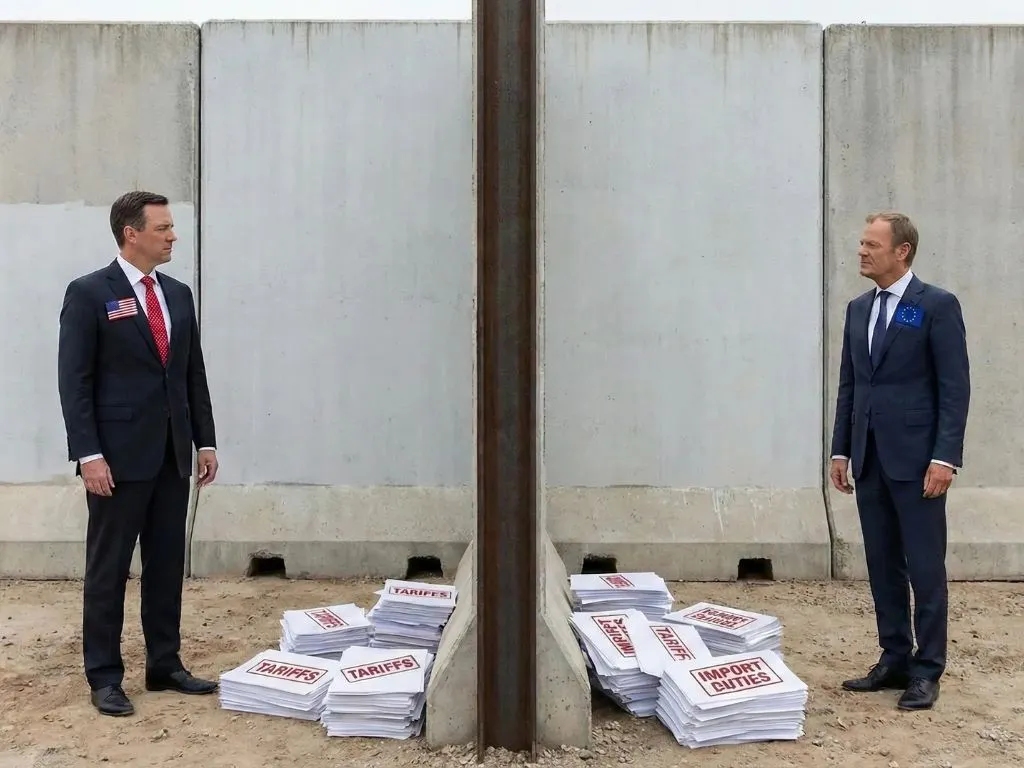
President Donald Trump announced sweeping 10% tariffs on eight European nations effective February 1, 2026, dramatically escalating trade tensions as he pressures Denmark to sell Greenland to the United States. The European Union responded by suspending its landmark trade deal with Washington and preparing €93 billion in retaliatory tariffs, marking the most severe transatlantic trade crisis in decades.
European Parliament Suspends US Trade Deal
The European Parliament immediately moved to halt approval of the EU-US trade agreement reached in July 2025, which would have removed import duties on numerous European products. Manfred Weber, head of the European People's Party, confirmed late Saturday that parliamentary approval was "not possible for now" given Trump's tariff threats.
The suspended deal represented months of negotiations that had temporarily stabilized EU-US trade relations after years of tension. Under the agreement, the EU maintained existing 15% tariffs on US goods while preparing to eliminate duties on American exports ranging from agricultural products to industrial equipment.
EU Prepares Massive Retaliation Package
European Union ambassadors reached broad agreement Sunday to deploy unprecedented counter-measures if Trump follows through with his threats. Officials are considering activating a €93 billion tariff package that could automatically take effect February 6, targeting key US exports including technology, agriculture, and industrial goods.
The bloc is also evaluating its never-before-used Anti-Coercion Instrument, which would restrict US access to European public tenders, limit banking activities, and reduce trade in digital services where America maintains a surplus with Europe. French President Emmanuel Macron pushed strongly for activating this "nuclear option," while other EU leaders favored the tariff response as a more measured first step.
Markets React to Escalating Trade War
Global financial markets opened lower Monday as investors digested the implications of renewed US-EU trade tensions. The euro fell 0.8% against the dollar in early Asian trading, while European futures declined 1.2% ahead of the opening bell. US Treasury yields rose as traders positioned for potential economic disruption from cross-Atlantic tariff wars.
The targeted European nations - Denmark, Sweden, France, Germany, Netherlands, Finland, Norway, and Britain - represent over $400 billion in annual trade with the United States. Many of these countries already face existing US tariffs of 10-15% implemented during Trump's previous presidency.
Diplomatic Efforts Intensify at Davos
European leaders plan to use this week's World Economic Forum in Davos to engage directly with US officials before the February 1 tariff deadline. Trump is scheduled to deliver a keynote address Wednesday, his first Davos appearance in six years, providing a potential forum for negotiations.
European Council President Antonio Costa emphasized the EU's "strong commitment to support Denmark and Greenland" while expressing readiness to "defend against any form of coercion." Danish Prime Minister Mette Frederiksen declared definitively that "Europe will not be blackmailed," while maintaining Denmark's willingness to continue security cooperation with Washington on Arctic matters.
Greenland at Center of Dispute
Trump's tariff threats stem from his renewed push to acquire Greenland, the Danish autonomous territory rich in rare earth minerals and strategically positioned in the Arctic. The president has linked trade policy directly to territorial demands, stating the tariffs will remain until Denmark agrees to sell the island.
Small contingents of European military personnel have been deployed to Greenland in recent weeks, further inflaming tensions with Washington. Thousands of Greenlandic residents protested Saturday against US acquisition attempts, carrying signs reading "Greenland Is Not For Sale" through the capital Nuuk.
Economic Stakes and Market Outlook
The potential trade war threatens to disrupt $1.2 trillion in annual US-EU commerce, the world's largest bilateral trading relationship. European officials warn that Trump's approach could trigger a "dangerous downward spiral" in transatlantic relations, potentially affecting everything from defense cooperation to technology partnerships.
Economists project that comprehensive tariff wars could reduce global GDP growth by 0.3-0.5 percentage points in 2026, with particular impacts on multinational corporations dependent on cross-Atlantic supply chains. The uncertainty is already affecting business investment decisions and currency valuations worldwide.
An emergency EU summit Thursday will finalize the bloc's response strategy, with leaders weighing diplomatic engagement against the need to demonstrate resolve against what they characterize as economic blackmail. The outcome could reshape international trade relationships and set precedents for how democratic allies handle territorial disputes in an increasingly multipolar world.
Mentioned tickers: EUR/USD