Pomegra
Markets Open Under Pressure as Geopolitical Tension Peaks
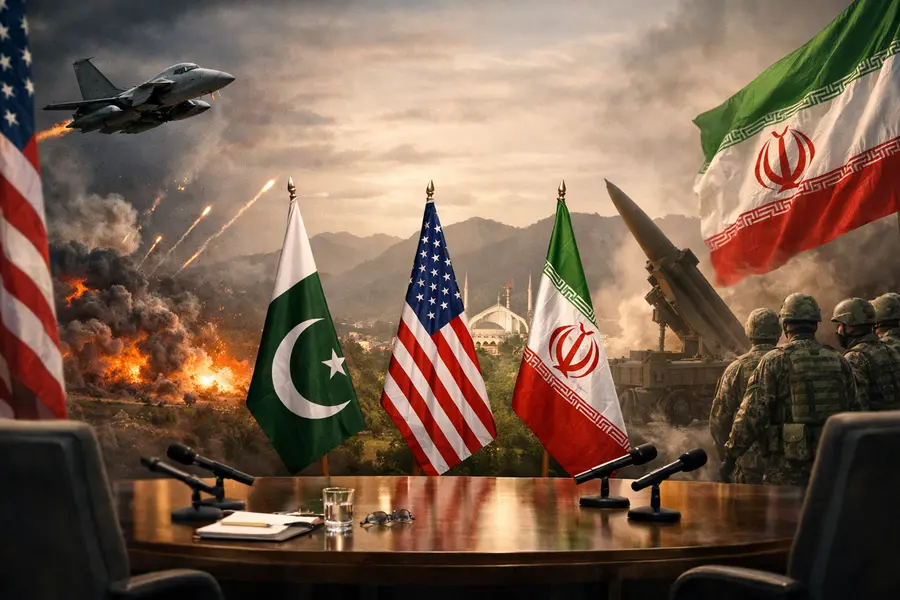
U.S. equities opened lower Tuesday as investors absorbed the weight of Trump's Truth Social ultimatum — "A whole civilization will die tonight" — directed at Tehran. The three major indices registered losses across the board, reflecting the highest level of geopolitical risk premium priced into markets since the conflict's onset. The S&P 500 fell 45.90 points, or 0.69%, to settle at 6,565.93. The Nasdaq Composite dropped 292.75 points, or 1.33%, closing at 21,703.59, while the Dow Jones Industrial Average shed 223.58 points, or 0.48%, to end the session at 46,446.30.
Monday's Gains Reversed as Ceasefire Optimism Evaporates
The April 7 selloff came on the heels of a solid Monday session, when all three indices had closed in positive territory. The Dow had gained 165.21 points (+0.4%) to 46,669.88, the S&P 500 advanced 29.33 points (+0.4%) to 6,612.02, and the Nasdaq climbed 117.16 points (+0.5%) to 21,996.34 — buoyed by reports that U.S. and Iranian negotiators, alongside regional mediators, were exploring a partial 45-day ceasefire framework that could reopen the Strait. Tuesday's session erased those gains entirely as deal prospects faded and Trump intensified his rhetoric.
Oil Surges, Safe-Haven Assets Rally
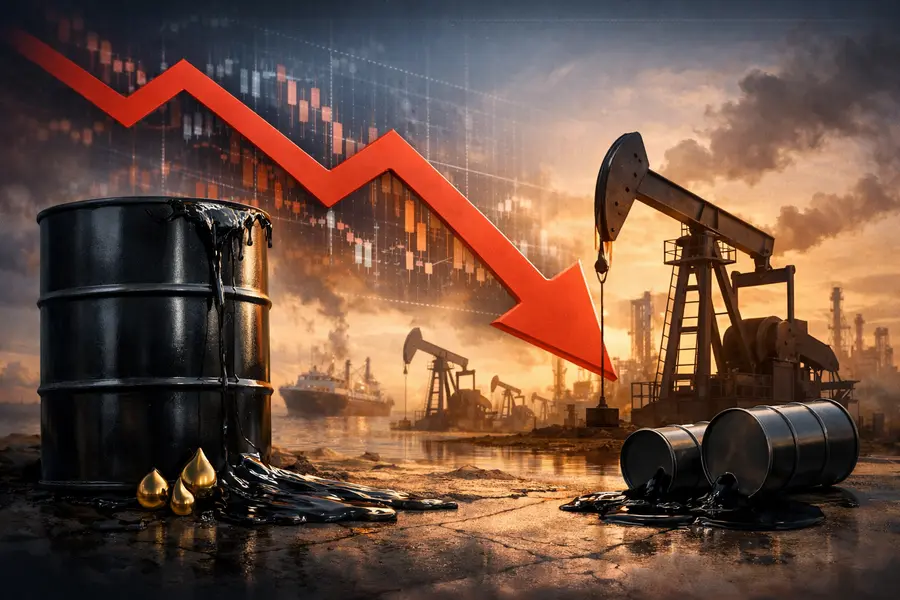
Crude oil dominated the commodity landscape as West Texas Intermediate surged 3% above $116 per barrel, with Brent crude climbing 0.8% to $110. The moves reflected direct market fears over potential disruptions to Iranian energy infrastructure and continued blockage of the Strait of Hormuz — a critical artery for roughly 20% of global oil flow. Gold held firm at $4,655.89 per ounce, up 0.2% on the session, as investors rotated into traditional safe-haven assets. Silver outperformed, surging 1% on a combination of industrial demand and geopolitical hedging. The U.S. Dollar Index strengthened near 104.5, while 10-year Treasury yields climbed to 3.75% as safe-haven demand drove inflows into government bonds. Bitcoin retreated sharply, sliding below $69,000 — down approximately 2.73% to $67,854 — amid over $230 million in crypto liquidations as risk sentiment deteriorated.Sector Rotation: Energy and Healthcare Outperform, Tech Bears the Brunt
The session produced a sharp sector divergence. Energy and defense stocks advanced on elevated oil prices and defense contract expectations, while technology and consumer names absorbed the sharpest losses. On the Dow, UnitedHealth Group led gainers with an 8.40% surge to $305.00, followed by Intel (+2.56% to $52.08) and Chevron (+2.51% to $203.85). On the losing side, Apple fell 4.72% by $12.22, while Nike dropped 3.27%.
Within the Nasdaq, Broadcom bucked the tech-wide selloff, surging 3.14% to $324.30, while Tesla declined 3.83% alongside Apple's losses. The Magnificent 7 cohort broadly weighed on index performance, reflecting continued vulnerability of large-cap tech to risk-off rotations during geopolitical stress events. CVS Health stood out on the S&P 500, gaining 6.07% to $77.73, reinforcing healthcare's defensive appeal.
Volatility Elevated, Breadth Mixed
The CBOE Volatility Index (VIX) settled at 24.17, up 1.26% on the day, signaling elevated near-term uncertainty. Total NYSE trading volume registered at 14.78 billion shares, below the 20-session average of 19.51 billion, suggesting restrained conviction on both the buy and sell sides. On Monday, advancers had outnumbered decliners on the NYSE by a 1.93-to-1 ratio — a breadth signal that reversed decisively by Tuesday's close as the geopolitical backdrop darkened.
UBS Cuts Year-End S&P 500 Target Amid Middle East Uncertainty
Amid the turmoil, UBS reduced its year-end S&P 500 forecast, citing mounting uncertainty stemming from the U.S.-Iran conflict and its cascading economic consequences — including elevated energy costs, potential supply chain disruptions, and dampened consumer confidence. The revision adds to a growing list of institutional downgrades to domestic equity outlooks as the Middle East conflict extends beyond initial market projections.
Markets Await Resolution of Trump's Iran Deadline
Wall Street closed April 7 on edge, with traders and risk managers monitoring the White House's next move following the expiration of Trump's 8 p.m. deadline. The outcome — whether military escalation, a negotiated pause, or continued diplomatic engagement — carries substantial implications for crude oil prices, equity volatility, and global risk appetite heading into the remainder of the week. Energy, defense, and safe-haven assets remain the primary beneficiaries of the current environment, while technology and consumer-facing sectors face continued headwinds until a clearer geopolitical trajectory emerges.
---
Mentioned tickers: SPY, QQQ, `DIA`, VIX, `XLP`, `XLY`, `XLU`, `XLK`, `CCL`, `RCL`, `AAPL`, `NKE`, `INTC`, `CVX`, `UNH`, `AVGO`, `TSLA`, `CVS`