Pomegra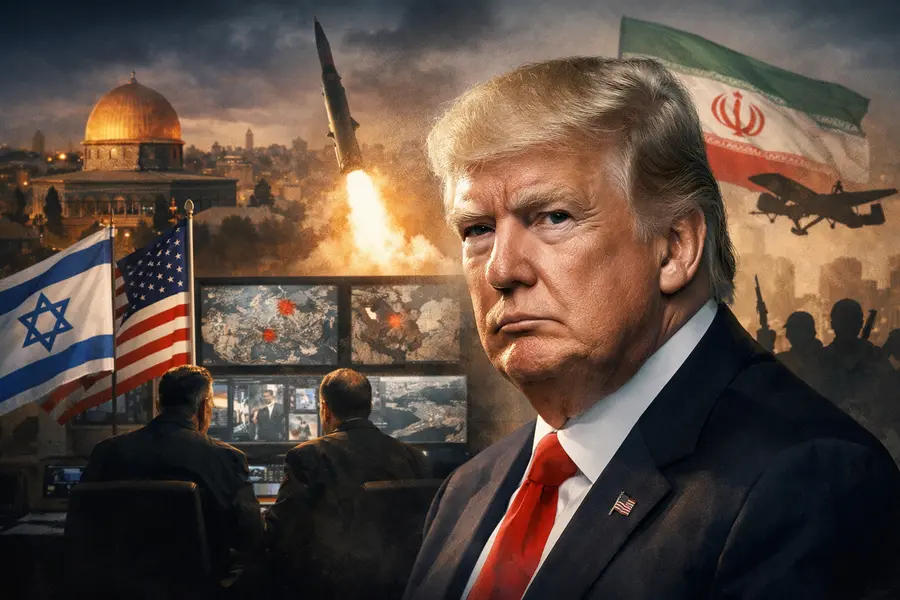
Israel shared intelligence with Washington warning that Iranian hardliners devised a new plot to assassinate President Trump, deepening US-Iran geopolitical tension as ceasefire talks stall.
- Israeli intelligence identified IRGC commander Ahmad Vahidi as a proponent of plans to target Trump amid ongoing US-Iran military conflict.
- U.S. intelligence found no evidence of a concrete operational plot, only sustained Iranian desire to assassinate Trump.
- The intelligence disclosure is viewed partly as an Israeli effort to influence Trump's Iran policy as Netanyahu is sidelined from ceasefire negotiations.
Lead
Washington / Jerusalem — Israel shared intelligence with the United States in early July 2026 warning that elements of Iran's hardline leadership had devised a new plot to assassinate President Donald Trump, three sources familiar with the matter confirmed. The warning, delivered at the intelligence level, named the commander of Iran's Islamic Revolutionary Guard Corps (IRGC), Ahmad Vahidi, among those advocating for the targeting of the American president. The disclosure arrives at a critical juncture in Middle East geopolitics, as a fragile U.S.-Iran ceasefire collapsed on July 8 and Netanyahu moves to reassert Israel's role in shaping Washington's Iran strategy.What Happened
Israeli intelligence passed information to the Trump administration indicating that a faction within Tehran's hardline establishment had discussed a plan to assassinate Trump. The Israeli report identified Vahidi — installed as IRGC commander following the death of Supreme Leader Ali Khamenei during U.S.-Iran military hostilities — as a central figure promoting the idea. Vahidi has been placed on the Trump administration's internal list of Iranian "obstructionists," officials believed to be actively undermining diplomatic negotiations between the two governments.The intelligence does not describe a specific operational blueprint — no confirmed team, timeline, or method — but rather reflects a stated desire among a segment of Iran's security establishment to target the president.
U.S. Intelligence Assessment
The Trump security apparatus has maintained continuous monitoring of Iranian threat activity since early in Trump's second term, given long-standing warnings from intelligence agencies that Iran may seek to avenge the January 2020 drone strike ordered by Trump that killed IRGC Quds Force commander Qasem Soleimani. In that context, the Israeli warning was not entirely novel: American intelligence officials had already been tracking a steady stream of reporting on Iranian actors expressing desire to target Trump.
However, as of the date of Israel's disclosure, U.S. intelligence agencies assessed that Iran had either failed to develop a viable operational plan or had not received authorization from senior Iranian decision-makers to proceed. The details underpinning the Israel intelligence Iran plot warning had not been independently vetted by U.S. agencies before Israel surfaced them.
Strategic Context
The timing of the disclosure carries significant geopolitical weight. Israel has been progressively sidelined from the Trump administration's efforts to negotiate an end to U.S.-Iran hostilities. Washington has elevated engagement with Qatar, Saudi Arabia, Turkey, and Pakistan as diplomatic interlocutors, reducing Netanyahu's influence over the trajectory of the conflict. In that context, several U.S. officials assessed the Israeli intelligence sharing as serving a secondary purpose: shaping Trump's decision-making on Iran at a moment when Israel wants to maintain military pressure on Tehran and its proxies.
The Trump administration's ceasefire with Iran formally collapsed on July 8 following an exchange of fresh strikes, and the low-intensity conflict between U.S. and Iranian forces has resumed. That environment increases the value, from Israel's perspective, of intelligence that frames Iran as an ongoing and escalating threat to American leadership.
Geopolitical Dimension
The US Iran geopolitical tension underlying this episode runs deeper than the immediate assassination warning. The IRGC's vow of revenge following Khamenei's death has elevated the threat environment for U.S. officials and assets in the region. For Iran's hardline security apparatus, targeting Trump would serve dual purposes: retribution for Soleimani's killing and a demonstration of institutional resilience following the leadership vacuum created by the supreme leader's death.
For Israel, the episode underscores the complexity of its current strategic position. Netanyahu faces parliamentary elections in October, a rift with Trump that has grown sharper as the war has extended, and international relationships strained by the prolonged Gaza conflict. Feeding Middle East intelligence that places Iran's threat to Trump in sharp relief is consistent with Netanyahu's political incentive to align Israel's security interests with the American president's personal security — even as Trump has openly warned Israel it would be "on its own" if strikes on Lebanon continue to obstruct ceasefire efforts.
What Comes Next
The ceasefire's collapse and Vahidi's consolidation of IRGC command will keep Trump security concerns elevated through the summer. Regional mediators — Qatar and Pakistan remain the most active — are working to return both parties to the negotiating table, but no timeline has been confirmed. The U.S. intelligence community is expected to continue monitoring Iranian threat streams closely, though officials have so far declined to elevate the formal threat level based on the Israeli warning alone.
Whether the disclosure influences Trump's calculus on Iran — specifically whether to intensify military action or recommit to diplomacy — remains the central question in Washington. Israel's capacity to shape that outcome through Middle East intelligence channels depends, in part, on how credible U.S. officials judge its reporting to be.
Outlook
The Israeli warning of an Iran plot against Trump has injected new friction into an already volatile US-Iran geopolitical moment. With the ceasefire broken, IRGC leadership restructured under Vahidi, and back-channel diplomacy stalled, the risk environment for U.S. leadership remains elevated. Israel's dual role — as an intelligence partner and as a stakeholder with its own strategic agenda — will continue to complicate how Washington evaluates and acts on the intelligence it receives from Jerusalem.
Mentioned tickers: NoneGeopolitics }}